.svg)
.jpg)
Cold emailing has a terrible reputation.
Most people think it’s spammy. Or desperate. Or something only “networking gods” can pull off.
That’s not true.

Cold emailing works - but only if you understand why most cold emails fail and avoid doing the same things everyone else is doing.
This guide is for people who:
- Have applied to 50+ jobs and heard nothing back
- Feel stuck waiting for recruiters to reply
- Want an unfair advantage without “knowing someone”
- Are willing to do focused effort instead of mass-applying
Let’s walk through how cold emailing actually gets people hired, step by step, with examples, mistakes to avoid, and tools to make this easier.
First: What Cold Emailing Is (and What It Is NOT)
Cold emailing is not:
- Sending your resume to careers@company.com
- Copy-pasting the same message to 100 people
- Begging for a referral
- Asking “Are you hiring?”
Cold emailing is:
- Reaching out to a specific human
- Showing you understand their company or team
- Making it easy for them to say yes to a conversation
Think of it as a warm introduction you create yourself.
Why Cold Emailing Still Works? (Even When Hiring Is Slow)
Here’s the uncomfortable truth: Most job applications are never read by a human. They die inside ATS systems, keyword filters, or internal backlogs.
Cold emailing works because it:
- Skips the resume black hole
- Reaches decision-makers directly
- Signals initiative (which most candidates don’t show)
- Lets you control the narrative instead of being “Applicant #312”
Step 1: Stop Emailing Recruiters (Email the Right People)
This is where most people mess up. Recruiters are overloaded. Hiring managers and team leads are not actively scanning job portals - but they do respond to relevant, thoughtful messages.
Who should you email instead?
Look for:
- Hiring managers
- Team leads
- Founders (for startups)
- Heads of function (Product, Engineering, Marketing, etc.)
A simple rule: Email the person who would actually work with you. LinkedIn is your best friend here. You can also use company “About” pages, blogs, or even GitHub for engineering roles.
Step 2: Don’t Pitch Yourself. Start with Context.
Most cold emails sound like this:
“Hi, I’m a passionate developer with 3 years of experience…”
That’s an instant delete.
Your first 2 lines should prove:
- You didn’t mass-send this
- You understand what the company is doing
Good opening examples
- “I saw your post about scaling the growth team for Q2 - especially the part about retention being harder than acquisition.”
- “I’ve been using your app for the last 3 weeks and noticed how different your onboarding is from most tools in this space.”
This shows intent, not desperation.
Step 3: Make the Email About Their Problem, Not Your Resume
Here’s a mindset shift that changes everything:
You are not asking for a job.
You are offering relevant help.
Instead of:
- “Here is my resume”
- “I’m looking for opportunities”
Try:
- “I noticed X problem and have worked on something similar”
- “If helpful, I’d love to share how we approached this at my last role”
This turns your email from a request into a conversation.
Step 4: Keep the Email Short (Seriously)
Your email should fit on a phone screen.
Ideal length: 80–120 words
Structure:
- Personal context (2 lines)
- Relevant value or insight (2–3 lines)
- Soft ask (1 line)
Example Cold Email (That Actually Gets Replies)
Hi John,
I came across your post about expanding the product analytics team at [Company]. The point about teams shipping fast but lacking insight resonated with me.
I’ve worked on building lightweight dashboards for PMs to spot drop-offs early, especially in B2B tools. Would love to share how we approached this if you think it’s relevant.
Either way, appreciate the work your team is doing.
- Sarah
No attachments. No begging. No buzzwords.
Step 5: Your Resume Still Matters (A Lot)
Cold emails get replies.
Your resume gets you interviews.
If your resume is weak, the conversation ends quietly.
Before you send any cold emails, make sure your resume:
- Is ATS-friendly
- Is tailored to the role
- Shows impact, not just responsibilities
You can:
- Check how strong your resume actually is using this free resume checker and scoring tool.
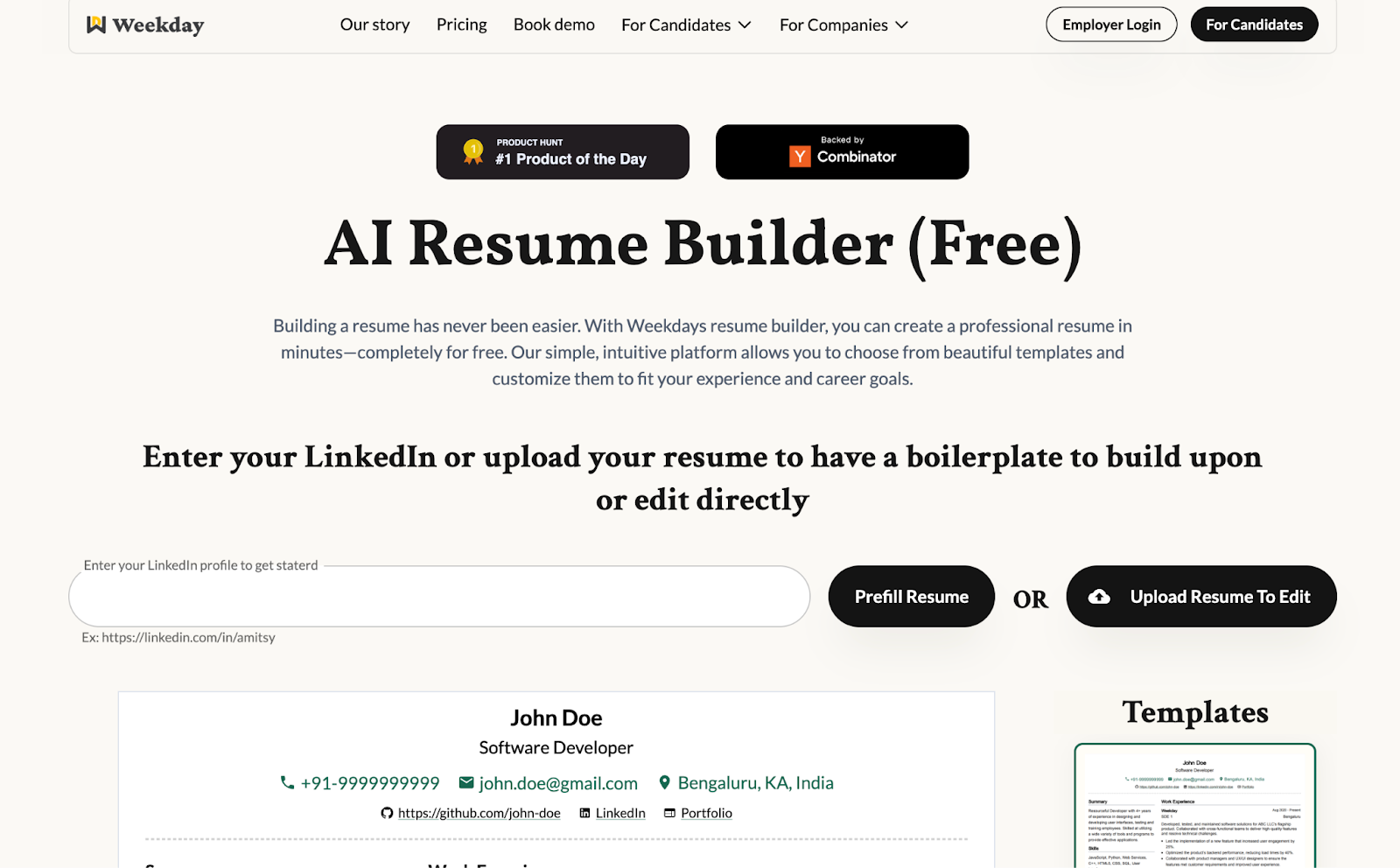
- Create or rewrite your resume properly using the Weekday Free Resume Builder
Most people skip this step. Don’t.
Related: How to write a good Resume? (That people actually want to read)
Step 6: Follow Up (Once, Not Forever)
If they don’t reply, wait 5–7 days, then send a short follow-up.
Example:
“Just bumping this in case it got buried - no worries if now isn’t the right time.”
That’s it. No third email. No guilt-tripping. A surprising number of replies come from follow-ups.
Where to Find Roles Worth Cold Emailing For
Cold emailing works best when:
- The company is growing
- The team is small to mid-size
- The role isn’t flooded with applicants yet
Useful places that are absolutely free to use:
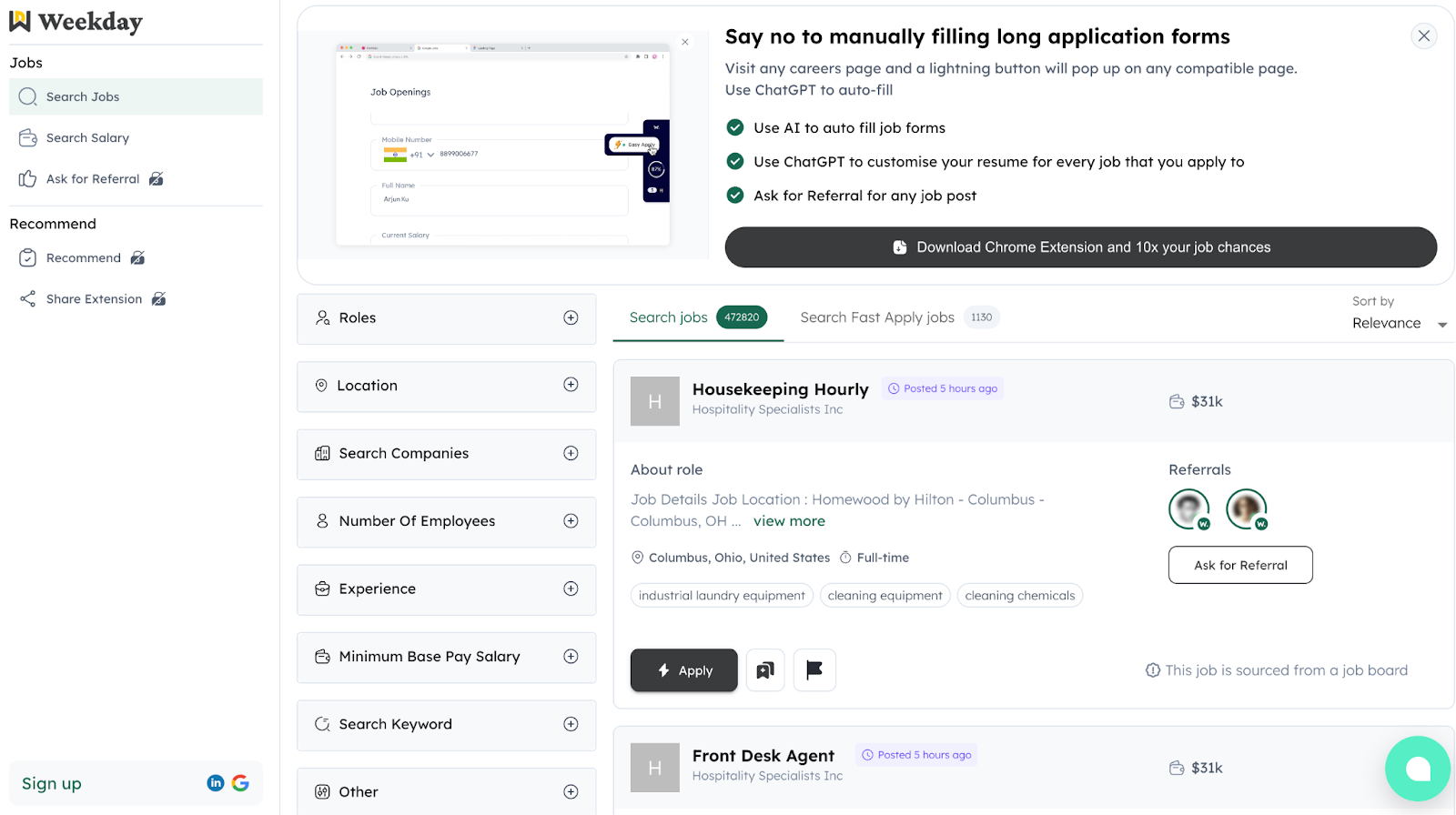
- Weekday’s free job portal lists all the companies hiring via Weekday and thousands of top curated jobs for you to apply. You can apply manually to any jobs here (bonus: you can also search salaries of any company).
- Before you apply to a company, understanding what it’s like to work there can make all the difference. Weekday’s Company Work Culture Reviews is a dedicated place where real insights about company culture, employee experiences, and workplace practices are collected in one easy-to-browse database.
If you understand the company before emailing, your response rate goes up dramatically.
Bonus: Make Cold Emailing Less Manual
If you’re doing this regularly, tooling helps.
For example, the Weekday Chrome extension helps you:
- Discover relevant roles while browsing
- Use AI to personalize outreach faster
- Reduce repetitive effort
You can check it out here
The Honest Truth About Cold Emailing
Cold emailing won’t magically get you a job in 2 days.
But it will:
- Give you control in a broken hiring system
- Get your resume seen by real humans
- Create opportunities that never show up on job boards
If you’re tired of waiting for replies, this is one of the few tactics that still moves the needle. Do it thoughtfully. Do it intentionally. And make sure your resume can back it up.