
.svg)
A clear job specification in HR helps define the roles, responsibilities, and skills needed to build an effective HR team. From hiring and payroll to compliance and employee support, HR plays a key role in every organisation.
This article explains the core elements of an HR job description, key HR roles, skills required, and provides a useful job description template for HR professionals.
What is Human Resources?
Human Resources, or HR, is the department within a company that oversees the employees.
The team assists with hiring new employees, providing training, and ensuring they are treated fairly.
HR also handles matters such as salaries, holidays, and employee benefits.
Top Roles and Responsibilities in Human Resources Roles
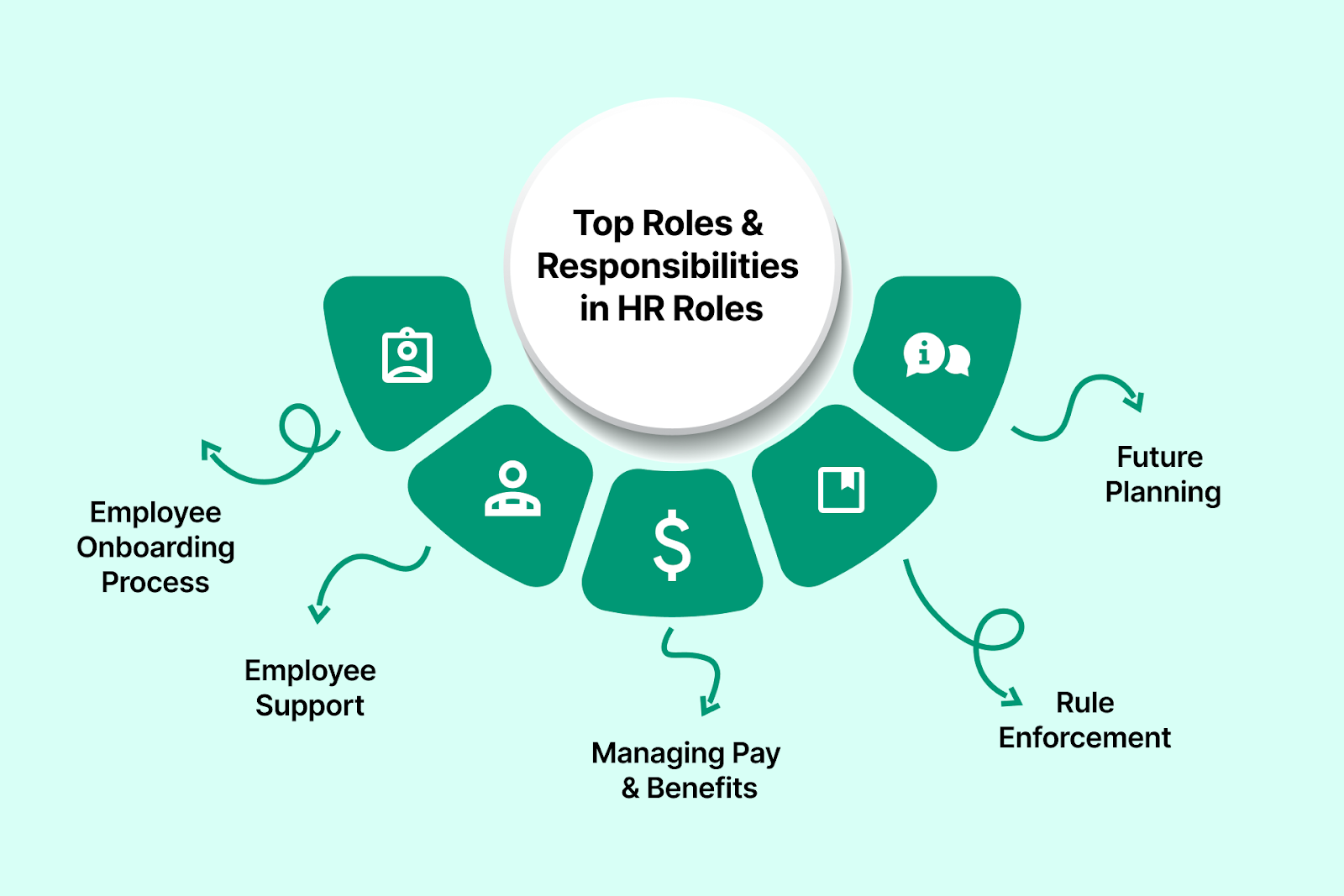
HR roles are designed to support both people and business goals. Job descriptions in this field often highlight the need for multitasking, strong communication, and decision-making skills.
The list below outlines the primary responsibilities commonly associated with HR roles.
1. Hiring and Welcoming New Employees
Bringing the right people into the company is a key part of HR's role. They make sure new employees are not only a good fit but also feel supported from the start.
- Finding the Right People: HR creates job posts, highlights the company's values, and offers competitive pay and benefits to attract skilled candidates.
- Handling the Hiring Process: They take care of reviewing resumes, setting up interviews, and selecting the best person for the role.
- Making New Employees Feel Welcome: After hiring, HR guides new employees through orientation, helps with paperwork, and ensures they understand their responsibilities.
2. Supporting Employees at Work
HR supports employees throughout their tenure at the company, helping them grow and succeed while addressing any challenges that may arise.
- Supporting Performance: HR establishes systems for tracking progress, providing feedback, and assisting employees in achieving their objectives.
- Solving Workplace Problems: When issues or conflicts arise, HR listens to both sides and works to find fair and equitable solutions.
- Providing Training: HR identifies skill gaps and organises training sessions or workshops to help employees acquire and enhance their skills.
3. Managing Pay and Benefits
Making sure employees are paid fairly and receive the benefits they deserve is another primary task handled by HR.
- Salary Planning: HR creates pay structures that are competitive and match the employee's role and performance.
- Handling Benefits: They manage benefits such as health insurance, leave policies, and retirement plans, ensuring employees understand and receive what is offered.
- Processing Payroll: HR ensures that salaries are paid accurately and on time, including tax calculations and any applicable deductions.
4. Making Sure Rules Are Followed
HR helps the company stay compliant and fair by ensuring that rules and laws are consistently followed.
- Follow Employment Laws: They ensure the company remains compliant with labour laws, thereby reducing the risk of legal trouble.
- Creating Company Policies: HR writes and updates rules that outline how employees should behave and how issues are addressed.
- Keeping Records: They manage confidential employee files, which are important for both legal and administrative needs.
5. Planning for the Future
HR looks ahead and helps the company grow by making sure it has the right people and workplace culture in place.
- Looking Ahead: They plan for future hiring by studying trends and predicting the skills the company will need in the future.
- Improving the Workplace: HR works to create a positive and productive work environment where employees can perform at their best.
- Focusing on Diversity and Inclusion: They develop programs and policies that welcome individuals from diverse backgrounds and ensure everyone feels respected and included.
What are the Skills Required for HR Professionals?
Human Resources is more than just hiring people or managing payroll. It's about building trust, solving workplace problems, and helping both employees and the company succeed together.
To do this effectively, HR professionals require a range of skills—some technical, some interpersonal, and some that stem from real-world experience.
Communication skills
- HR professionals must possess both verbal and written communication skills to clearly explain company rules, policies, and updates to employees.
- They should possess active listening skills to effectively understand employee concerns and respond to them.
- Interpersonal skills are crucial for establishing strong relationships with colleagues, supervisors, and job candidates.
- Negotiation skills help HR find fair solutions during salary talks or work agreements.
- HR should demonstrate cultural sensitivity and respect to foster an inclusive and welcoming workplace for all.
Technical and Job-Specific Skills
- HR professionals must be familiar with using HRIS (Human Resource Information Systems) to manage employee records, payroll, and performance data.
- They should have data analysis skills to study employee trends and make better decisions about hiring and training.
- Recruitment skills are essential for crafting effective job postings, conducting interviews, and selecting the right candidates.
- HR should be able to plan and conduct training and development programs to help employees acquire new skills and advance in their careers.
Soft Skills
- Strategic Workforce Planning enables HR to prepare for future hiring and talent needs, ensuring the company achieves its long-term objectives.
- Leadership Development is essential as HR guides teams, motivates employees, and supports career growth through coaching and mentoring.
- Change Management is necessary when HR professionals help teams transition to new tools, rules, or work processes smoothly and efficiently.
- Conflict Resolution and Emotional Intelligence enable HR to handle disputes reasonably by understanding emotions and helping employees communicate better.
- Organisational alignment means HR must stay well-organised and ensure their daily tasks support the company's overall business direction.
Educational Requirements for the HR Role
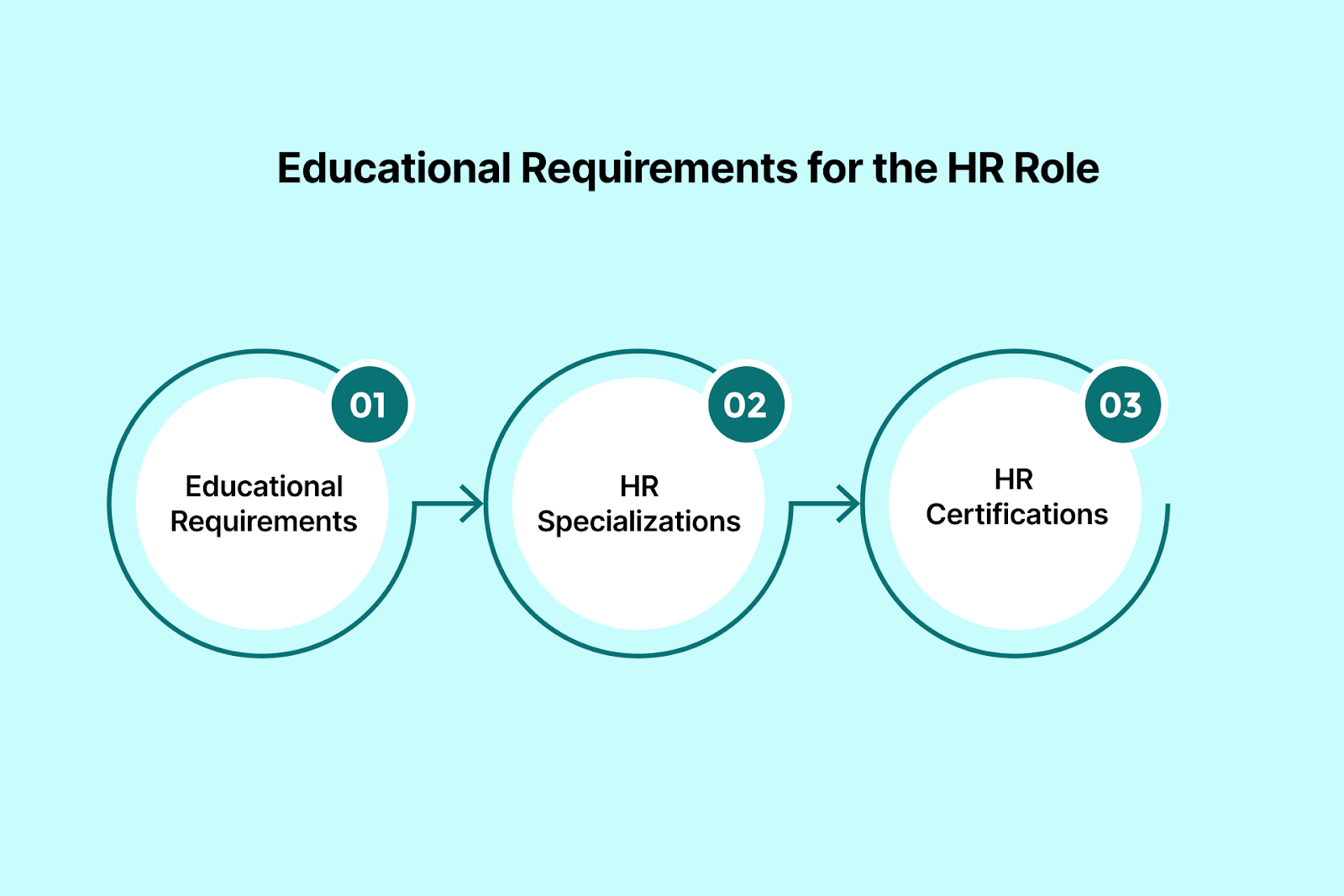
To succeed, individuals must meet specific educational requirements, gain relevant experience, and consider pursuing specialisations and certifications that align with their career goals.
Below are the key components necessary for building a successful HR career.
Educational Requirements
A solid educational background is crucial for starting and advancing in the HR field.
- Bachelor’s Degree: A degree in HR, Business Administration, Psychology, or related fields provides foundational knowledge in labour laws, employee relations, and HR practices.
- Master’s Degree: An MHRM or MBA in HR is ideal for those targeting leadership or strategic roles, offering deeper skills in workforce planning, performance management, and HR analytics.
- Related Fields: Degrees in Sociology, Education, or Public Administration can also lead to HR careers, especially when paired with relevant experience or certifications.
Recommended Specialisations in HR
Focusing on a specific area of HR allows professionals to become experts and grow in their niche. Popular HR specialisations include:
- HRIS Specialist – Managing Human Resource Information Systems and digital HR solutions.
- Global HR Manager – Overseeing international HR operations and compliance.
- Training and Development – Designing programs to enhance employee skills and performance.
- Employee Relations – Handling workplace conflicts, grievances, and culture building.
- Recruitment and Talent Acquisition – Sourcing, interviewing, and hiring top talent.
Certifications for HR Professionals
Certifications validate your expertise and commitment to the HR profession. Among the most recognised are:
- SHRM Certified Professional (SHRM-CP): Ideal for early- to mid-career professionals, this certification focuses on practical HR operations, policies, and employee engagement strategies.
- SHRM Senior Certified Professional (SHRM-SCP): Designed for senior-level professionals, this certification emphasises strategic HR leadership, policy formulation, and organisational development.
Need to hire faster or get your resume noticed? Our AI Resume Screener saves time, highlights key skills, and helps HR teams and job seekers succeed—try it today!
Sample Job Description for HR Roles
Are you looking for a Job Description for a Product Manager?
Generate the perfect one instantly. Our intuitive tool helps you effortlessly craft comprehensive and compelling JDs, ensuring you attract top-tier talent for your team.
HR Career Path: Common Roles at Every Level
As you grow in this field, you can move from beginner roles to senior positions with more responsibilities. Each level in HR has different tasks and skills. Below is a simple guide to the various roles in HR, from entry-level to leadership and specialised positions.
Entry-Level Roles
These roles are ideal for fresh graduates or those starting their careers in HR.
- Staff Coordinator: Assists in recruitment, schedules interviews, handles onboarding tasks, and manages time-off requests.
- Staffing Specialist: Writes job postings, screens applications, arranges interviews, and maintains employee schedules.
- HR Assistant: Supports basic HR functions like data entry, payroll assistance, and recruitment coordination.
- HR Associate: Responds to employee queries on payroll and benefits and organises documentation.
- HR Representative: Assists employees and candidates in understanding policies and benefits, and completes required paperwork.
- HR Administrator: Manages employee records, contracts, and HR databases.
Mid-Level Roles
These positions require experience and often involve decision-making and supervisory responsibilities.
- Personnel Manager: Oversees recruitment, onboarding, employee development, and performance reviews.
- HR Specialist: Focuses on specific HR functions such as talent acquisition, onboarding, or compliance.
- HR Generalist: Manages multiple HR functions, including policy updates, employee relations, and compliance.
- HR Supervisor: Leads a team of HR staff, oversees day-to-day processes, training, and payroll operations.
- HR Analyst: Gathers and analyses HR data to support decision-making related to compensation, hiring, and engagement.
Senior-Level Roles
These positions are strategic and leadership-focused, requiring years of experience and a strong HR background.
- HR Manager: Directs HR operations, from recruitment to compliance and employee relations.
- HR Director: Oversees HR policies, staffing plans, and department budgets; ensures alignment with business goals.
- Chief Human Resource Officer (CHRO): Leads the overall HR strategy and manages department-wide performance.
- Vice President of HR: Defines and drives long-term HR initiatives, workforce planning, and company-wide HR policies.
Specialised HR Roles
These professionals focus on niche areas within the HR field.
- Benefits Administrator: Manages employee benefits programs, including insurance and retirement plans.
- Recruiter: Designs hiring strategies and sources talent using job boards, networking, and events.
- Employee Relations Manager: Handles internal disputes, improves workplace culture, and maintains employee satisfaction.
- Training & Development Manager: Plans and delivers employee development programs and learning initiatives.
- Safety Manager: Ensures compliance with safety laws, conducts training, and reduces workplace hazards.
Want to know what companies pay? Weekday makes it simple to discover salary information for any business.
Finding the Right Fit For Your Team with Weekday
Knowing what an HR role involves is important, but finding the right people for those roles can be tough.
Weekday has details on over 80% of India's workforce—thanks to their job portal, a Chrome extension that rewards users for sharing their professional network, and partnerships with more than 20 trusted data sources.
You can hire in two ways. With their White Glove Service, a trained recruiter will find the right people for you and even set up the interviews.
Alternatively, you can opt for the Subscription Plan, which provides complete access to their database and tools, enabling you to reach out to candidates via email, WhatsApp, or phone. Even then, their team helps with messaging and calls.
Utilise the Weekday to proactively connect with top candidates and secure the best talent for your company.
.png)
.png)
.png)


