.svg)
.jpg)
There’s no such thing as a “standard career path” anymore.
The old playbook : pick a field, stick to it, climb the ladder , is fading fast. Today, careers look less like ladders and more like… webs.
People move across roles, industries, and functions. A lawyer becomes a product manager. A designer moves into research. A recruiter becomes an operator.
Not because they’re confused. Because they’re evolving.

The New Normal: Non-Linear Careers
If you look around, this shift is everywhere.
- The average professional holds multiple roles across their career
- Many switch industries entirely, not just companies
- Skills stack over time instead of following a straight path
Some data makes this even clearer:
- Over 57% of professionals have already switched careers at least once
- Most people will pivot 5–7 times across their working life
And with AI accelerating change, this isn’t slowing down anytime soon. Careers today aren’t built by staying in one lane. They’re built by connecting different ones.
You’re More Than Your Job Title
One of the biggest shifts is how people see themselves. A title used to define what you did. Now, it barely scratches the surface.
Someone might be:
- A marketer who understands data
- A designer who can think like a product manager
- An engineer who can communicate like a founder
These combinations weren’t common before. Now, they’re where the real value is. Because the most useful people aren’t specialists or generalists. They’re connectors.
But Hiring Still Thinks It’s 2010
Here’s where things break. While careers have evolved, hiring hasn’t. Most job descriptions still look like this:
- 5+ years in the same role
- Experience in the same industry
- Linear progression
- Clearly defined titles
In other words, we’re still hiring for predictability in a world that rewards adaptability. And that creates a mismatch.
The JD Problem
A typical job description assumes:
“If someone has done this exact job before, they’ll do it well again.”
But that’s no longer true.
Some of the best candidates:
- Don’t have the exact title
- Come from adjacent industries
- Bring transferable skills
Yet they get filtered out early. Not because they lack ability. Because they don’t fit the template.
The Hidden Cost of This Mismatch
When hiring systems don’t account for career fluidity, a few things happen:
- Strong candidates never enter your pipeline
- Others get rejected too early
- Teams end up choosing from a narrow pool
And ironically, companies say:
“We can’t find the right talent.”
The talent exists. It just doesn’t look like what you expected.
What Forward-Thinking Teams Are Doing Differently
Some teams are starting to adapt.
Instead of filtering strictly by titles and past roles, they focus on:
- Skills and problem-solving ability
- Context over credentials
- Potential, not just experience
This also changes how they source talent.
Rather than relying only on inbound applications, they tap into curated talent pools where candidates are evaluated beyond just resumes , like what you see with models such as Weekday Subscription Access.

Rethinking Evaluation
If careers are fluid, evaluation needs to be as well.
That means:
- Looking beyond job titles
- Reducing over-reliance on rigid resumes
- Identifying signal faster
Because when hundreds of applications come in, the real challenge isn’t access — it’s interpretation.
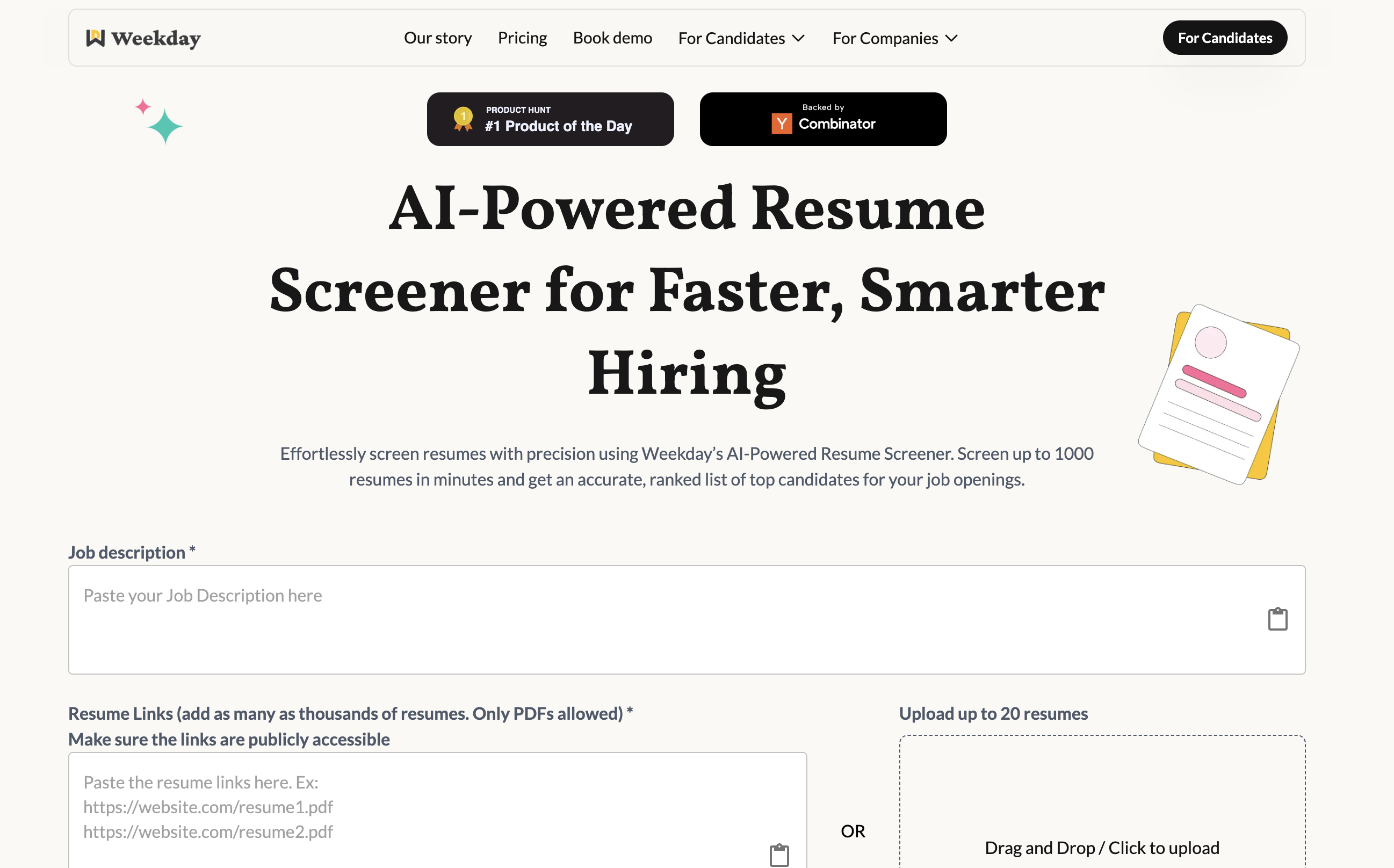
This is where smarter screening layers like Free Weekday Resume Screener help surface candidates who may not look obvious on paper, but are strong in practice.
Execution Still Matters
Even when companies open up their criteria, hiring can still break in execution.
Unclear outreach, slow follow-ups, and inconsistent processes often mean these unconventional candidates never convert.
Which is why some teams rely on structured hiring execution like Weekday Modern Recruiting Agency to actually engage and move the right candidates through the funnel.

And for teams scaling quickly, building this entire system internally isn’t always practical models like Weekday Forward Deployed Solutions help set up hiring systems that match this new reality.
The Shift That Needs to Happen
The question is no longer:
“Has this person done this exact job before?”
It’s:
- Can they solve the problem?
- Can they adapt quickly?
- Can they connect different experiences into value?
Because that’s what modern work demands.