.svg)
.jpg)
If you’re job hunting in 2026, you’re already competing with people who:
- tailor every resume,
- rewrite LinkedIn weekly,
- and rehearse interviews like it’s an Olympic sport.

ChatGPT doesn’t magically get you hired. But used correctly, it removes the most exhausting parts of the job search so you can focus on what actually moves the needle. This guide shows exactly how to use ChatGPT as a job-search assistant, not a content generator. Every section includes prompts you can copy-paste and real-world context on why it works.
1. Rewrite Your Resume for Maximum Impact
Most resumes fail for two boring reasons - They describe tasks, not outcomes. They’re written for humans, not ATS systems. ChatGPT is excellent at fixing both, if you feed it numbers and context.
The prompt that actually works
Here’s my background:
- Roles: [your roles]
- Skills: [tools + skills]
- Achievements (with numbers): [metrics, scale, impact]
Rewrite my resume for a [specific role] in [industry/country].
Make it ATS-friendly, action-verb heavy, and results-focused.
Do not exaggerate or invent experience.
Pro tip most people miss
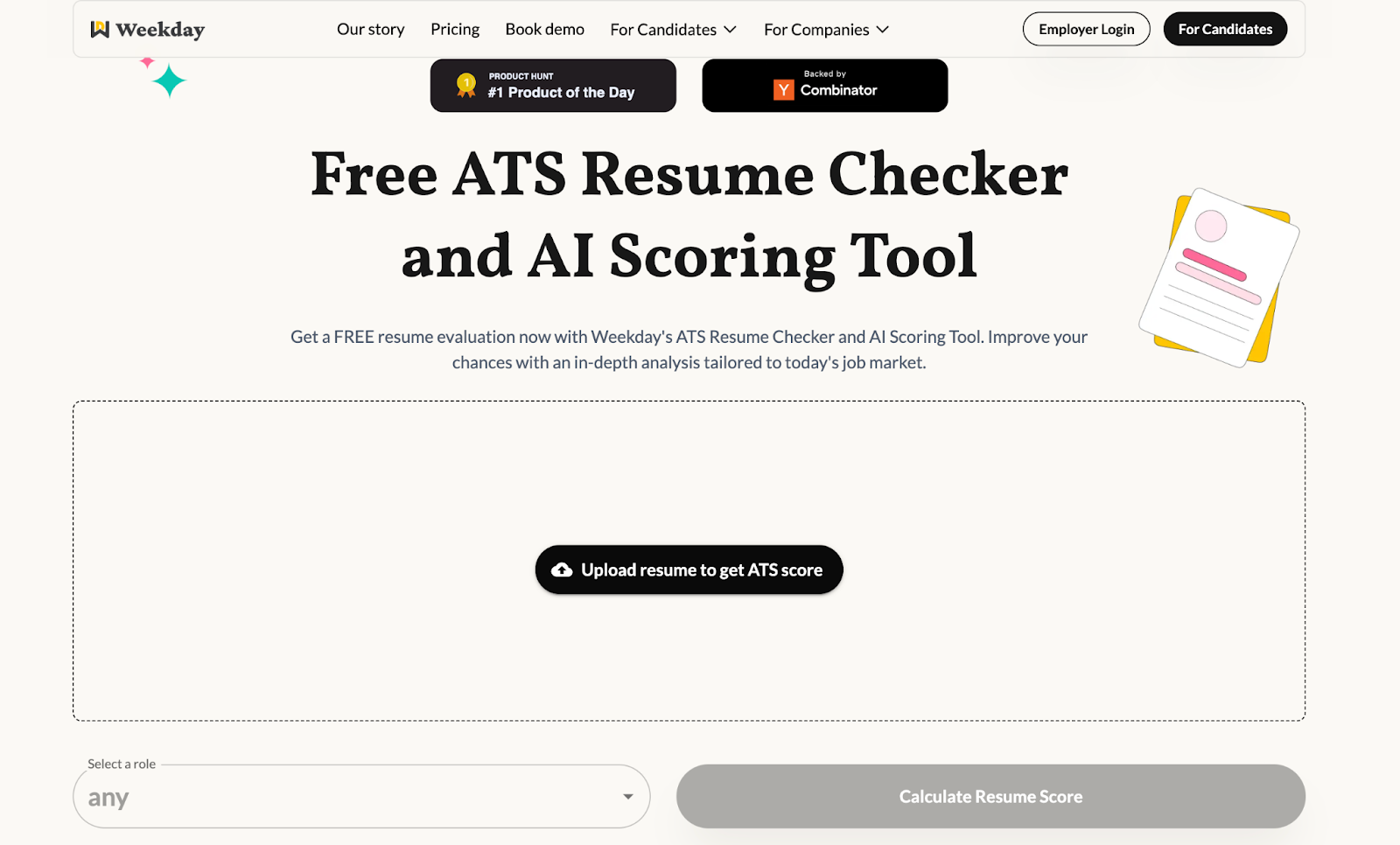
After ChatGPT rewrites it, run your resume through a checker before applying.
Use this to sanity-check relevance and ATS score here.
If the score is low, your resume won’t even reach a human.
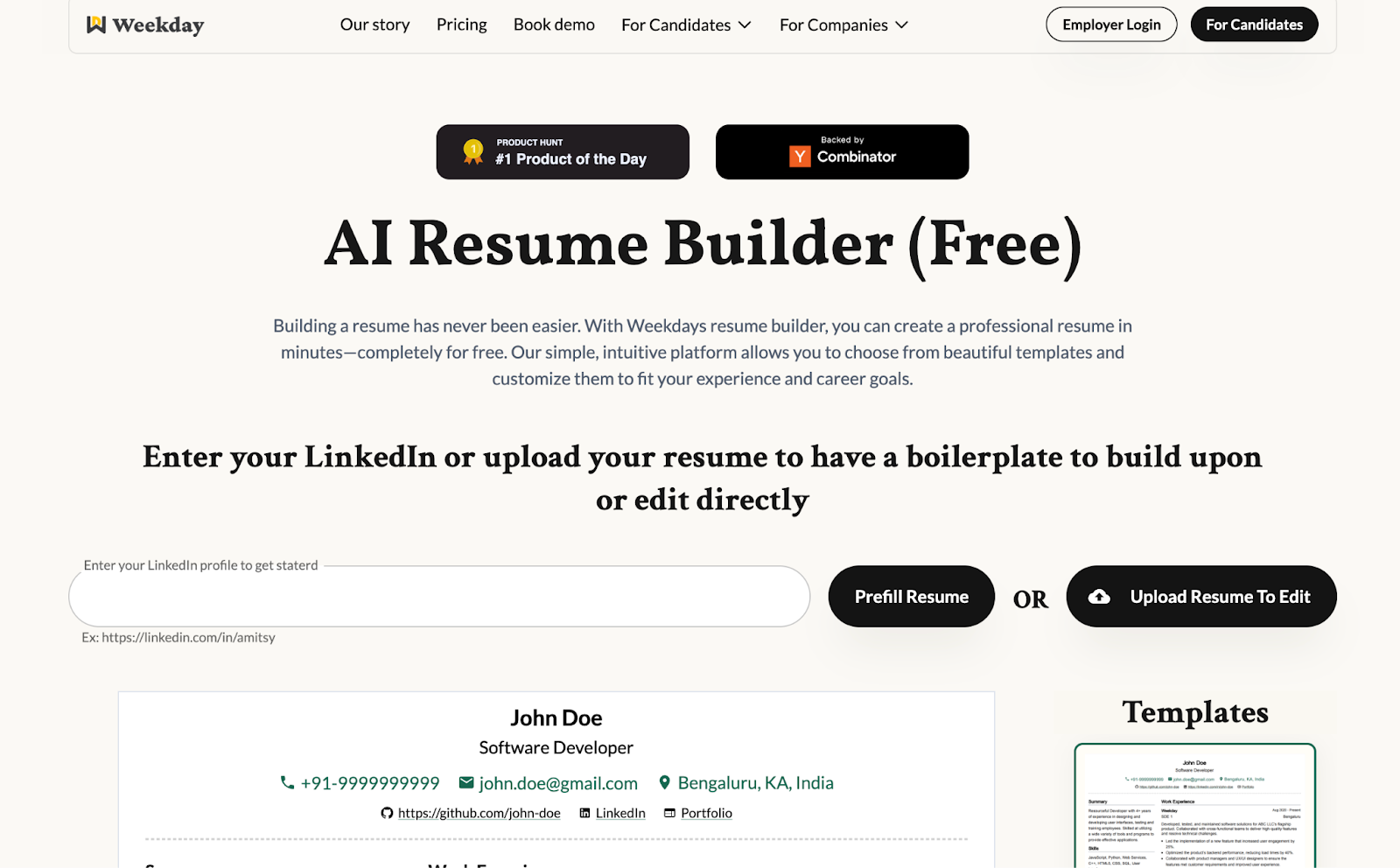
If you don’t have a solid resume yet, build one cleanly from scratch here:
2. Tailor Your Resume to Each Job
Yes, tailoring matters. No, you don’t need to rewrite your resume 40 times manually. This is where ChatGPT shines.
The resume-matching prompt
Here’s the job description:
[paste JD]
Here’s my resume:
[paste resume]
Compare both.
Highlight missing skills.
Rewrite my experience so it matches 80–90% of the requirements,
without exaggeration or false claims.
Why this works
Recruiters scan for pattern matches:
- keywords,
- tools,
- scope,
- role language.
This prompt helps you align phrasing without lying.
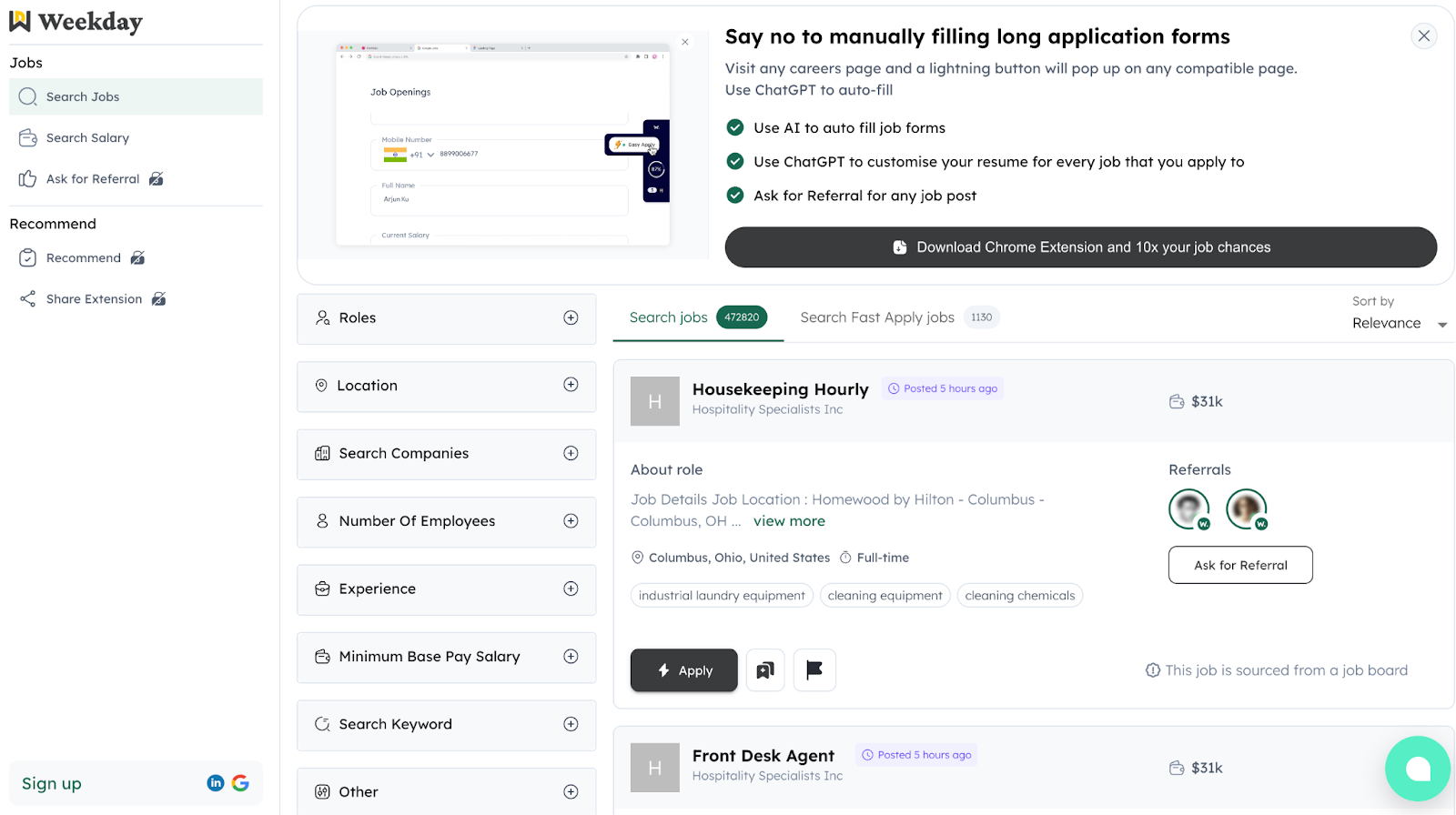
Once done, upload the tailored version when applying via this link.
3. Optimize Your LinkedIn Profile (So Recruiters Actually Reply)
Your LinkedIn profile isn’t your resume. It’s a pitch page. Most “About” sections are either:
- painfully generic, or
- 8 paragraphs nobody reads.
Use ChatGPT as a positioning editor
Here’s my current LinkedIn About section:
[paste]
Rewrite it as a recruiter-friendly pitch:
- who I am
- what I do
- what problems I solve
Keep it concise, confident, and keyword-rich.
No buzzwords.
Extra step (high leverage)
Ask ChatGPT to extract searchable keywords from job descriptions you want, and make sure those appear naturally in:
- headline,
- About section,
- experience bullets.
Want more signal on what companies are actually like before applying? Here is the link that you can access.
4. Write Cover Letters That Don’t Sound Like Cover Letters
Most cover letters fail because they:
- restate the resume,
- sound desperate,
- or are clearly copy-pasted.
You only need 4–5 strong sentences.
The only cover letter prompt you need
Write a 4–5 sentence cover letter for this job:
[paste JD]
Make it personal.
Mention one measurable achievement.
End with a confident call to action.
No fluff.
Then edit it yourself. Add one line that only you could write. That’s the difference.
5. Simulate Tough Interviews (This Is Criminally Underrated)
Interview prep usually means:
- reading blog posts,
- memorizing answers,
- hoping for the best.
Instead, turn ChatGPT into a brutal interviewer.
Interview simulation prompt
You are the hiring manager for [job role].
Ask me 10 behavioral and technical questions.
After each answer:
- critique clarity
- tone
- depth
- suggest improvements
This does two things:
- Exposes weak stories early.
- Trains you to answer like a human, not a textbook.
Repeat until answers feel natural.
6. Find Your Hidden Differentiators (This Is Where Offers Happen)
Most candidates say the same things:
- “hardworking”
- “fast learner”
- “team player”
That’s noise.
What stands out are:
- specific decisions,
- unusual transitions,
- real constraints you navigated.
Differentiator-finding prompt
Analyze my career history:
[paste background]
Identify 3–5 unique strengths or personal stories I can use to stand out in interviews.
Use these stories:
- in interviews,
- in networking chats,
- in LinkedIn posts.
Standing out isn’t about saying more. It’s about saying what matters.
ChatGPT gives you words. You still need distribution and signal.
Use it with tools, not instead of them.
- Resume building + formatting →Resume Builder
- Resume scoring before applying →Resume Checker and Scoring Tool
- Finding real jobs →Weekday Jobs Search
- Evaluating company culture →Company Culture and Work Reviews
Common mistakes to avoid
Before you go all-in, don’t do these:
- ❌ Copy-paste AI output without editing
- ❌ Apply with the same resume everywhere
- ❌ Use buzzwords you wouldn’t say out loud
- ❌ Let ChatGPT invent achievements
Recruiters don’t hate AI.
They hate lazy candidates.
Read more from Weekday on resumes & job search
If this helped, you’ll like these too:
- Resume formats for Gap Year
- How to write Resumes with No Experience
- How to Get a Job with Cold Emailing?
Explore more on the Weekday blog and tools here.