.svg)
.png)
Ever felt frustrated when a crucial position stays vacant for weeks? You’re not alone. The average time to hire is 36 days, making talent gaps costly and disruptive. Understanding the HR recruitment process can transform that wait into a competitive edge.
In this article, you’ll discover why a streamlined recruitment process matters, what each step achieves, and how you can fill roles faster with precision. Ready to cut down hiring delays and attract top talent?
Let’s dive into the proven seven-step framework that will overhaul your recruitment outcomes—and keep your team growing strong.
Key Takeaways
- Define clear role requirements to attract the right candidates.
- Write precise job descriptions optimized for visibility and quality applicants.
- Use proactive sourcing to reach both active and passive candidates.
- Screen efficiently to focus on qualified applicants and reduce bias.
- Conduct structured interviews to improve hiring accuracy and candidate experience.
- Manage offers swiftly to secure top talent and reduce drop-offs.
- Onboard effectively to boost new hire retention and productivity.
- Leverage Weekday’s AI-powered, peer-vouching platform grants access to 2.5 million+ verified candidates, reduces mis-hire risk by 35%, and fills roles in just 19 days.
What Is the HR Recruitment Process?
The HR recruitment process is a series of steps to identify, attract, evaluate, select, and onboard the right candidates for open positions.
Why You Need It:
- Aligns hiring with organizational goals and workforce needs.
- Prevents disruptions caused by unfilled roles.
- Improves the quality of hires and reduces turnover.
- Saves time and resources by minimizing mis-hires.
Common Challenges in the HR Recruitment Process
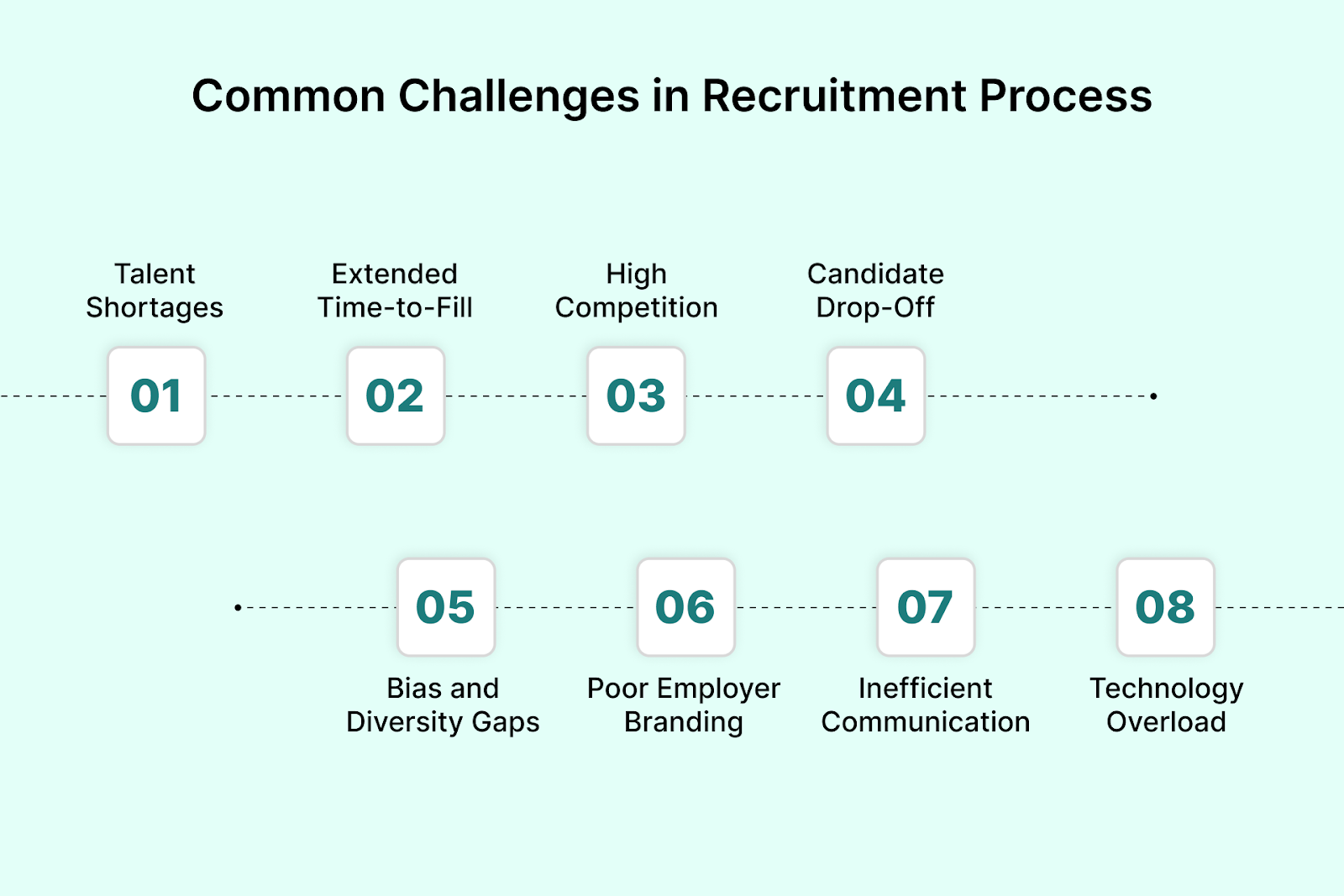
- Talent Shortages: 74% of employers report difficulty filling critical roles due to emerging skills gaps.
- Extended Time-to-Fill: Positions remain vacant for an average of 36 days, hurting productivity and morale.
- High Competition: Top candidates receive multiple offers, increasing the risk of offer rejection and counter-offers.
- Candidate Drop-Off: Complicated applications drive up to 60% of candidates to abandon recruitment mid-process.
- Bias and Diversity Gaps: Unconscious bias leads to homogenous hires, undermining inclusion and innovation.
- Poor Employer Branding: Weak brand perception deters qualified applicants and lengthens hiring cycles.
- Inefficient Communication: Delayed or unclear updates frustrate candidates and increase withdrawal rates.
- Technology Overload: Overreliance on outdated or excessive AI tools hampers personalization and candidate experience.
Having identified recruitment challenges, your next step is to create a clear role foundation. Precise preparation ensures focus throughout hiring.
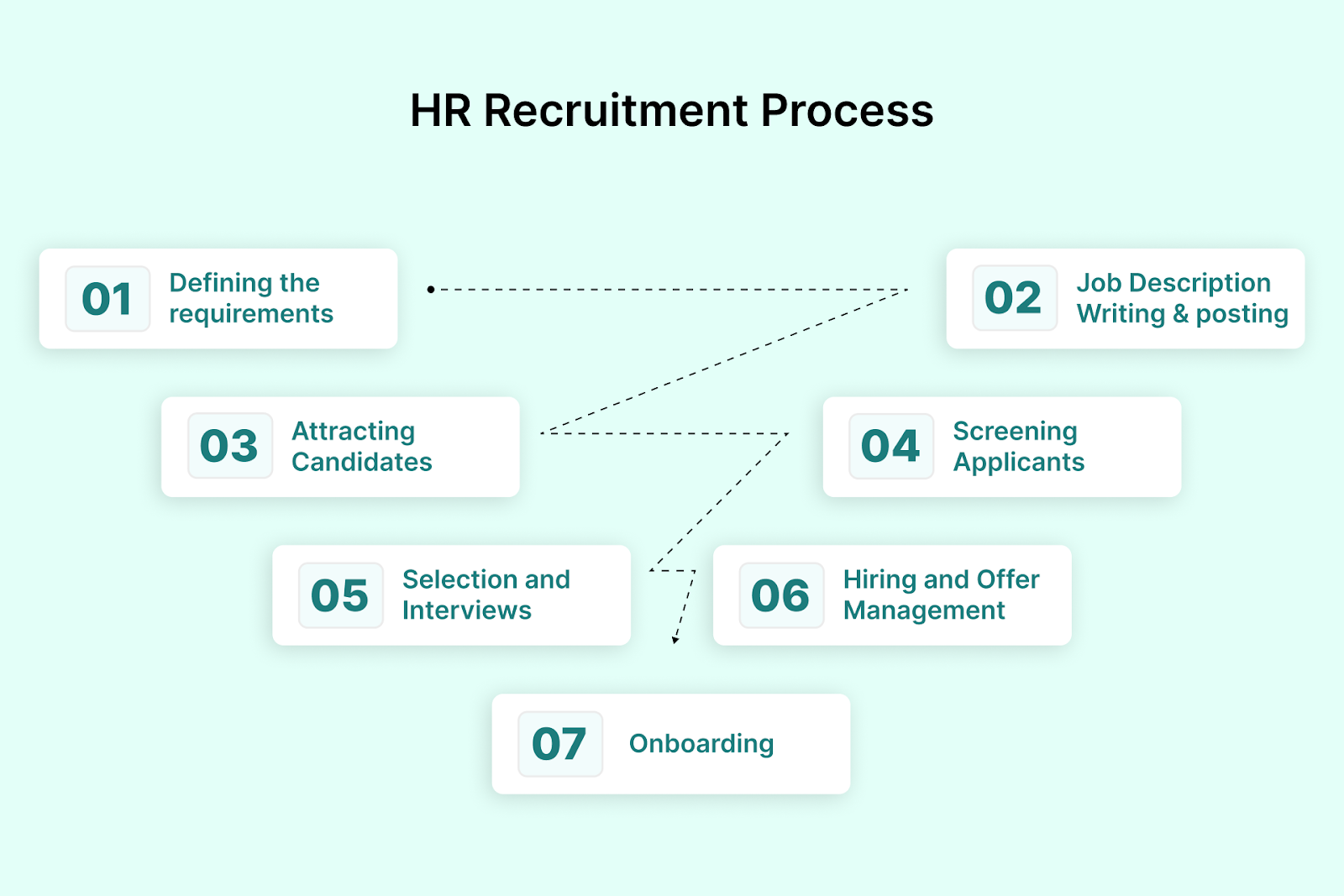
1. Preparation: Defining the Role and Requirements
Hiring the wrong person wastes your precious time and drains your team’s energy. You deserve clarity that helps your hiring managers avoid frustration and prevents candidates from applying to roles they’re not suited for.
Clear role definitions make your recruitment more efficient and respectful of everyone’s time. According to a survey, 69% of employers struggle to find qualified candidates when job requirements are vague or poorly defined.
Getting this step right helps you attract the right talent faster and keeps your hiring process smooth.
Key Activities Involved:
- Conduct in-depth interviews with hiring managers and relevant stakeholders to understand daily tasks, core challenges, and success criteria for the role.
- Apply competency frameworks to identify required technical skills, soft skills, and company culture fit.
- Develop a detailed job specification outlining responsibilities, reporting relationships, and key performance indicators.
- Collaborate closely with hiring managers to confirm that role scope, qualifications, and budget are aligned and realistic.
Impact on the Overall Process:
Well-defined roles reduce unqualified applications, sharpening your sourcing focus. This clarity speeds up the screening process. It shortens time-to-fill significantly, saving you valuable weeks finding the right hire.
2. Job Description Writing and Job Posting
Do you find yourself buried under heaps of résumés that just don’t fit? Clear job descriptions are the root of better applications.
When your listings are detailed and precise, you attract talent who actually match what you need, saving time and avoiding mismatches.
Clear job descriptions do more than fill roles; they serve as your company’s first impression. By setting the right expectations, you grab the attention of people qualified to apply while steering off-target candidates away.
Key Activities Involved:
- Begin with a compelling job title and an opening summary highlighting how the role impacts your business success.
- Spell out daily responsibilities, mandatory skills, and preferred experience.
- Mention your core values and company perks to engage candidates who want long-term growth.
- Use keywords like “HR recruitment process” and related terms naturally throughout your posting to improve visibility on major job boards and Google search.
- Share your job ad on platforms where your ideal candidates spend their time, from specialized boards to your company page.
Impact on the Overall Process:
Detailed job descriptions reduce time spent on screening by making it easier to spot the right fits quickly. Harvard Business Review reports that organizations with well-crafted job descriptions receive 50% more qualified applicants than those with vague postings.
Clear requirements also help prevent confusion for candidates, resulting in better engagement and fewer drop-offs during the application process.
When your job description is honest and targeted, you’re far more likely to build a strong team, one that aligns with your needs and grows with your company.
3. Sourcing: Finding and Attracting Candidates
Effective sourcing gets your openings in front of people who will make a difference on your team, not just anyone hunting for a job.
Sourcing goes beyond posting jobs and waiting for results. You need to actively seek candidates with the right skills, values, and growth potential for your organization. By casting a wider net, you get access to both active seekers and those open to new opportunities.
Key Activities Involved:
- Use Boolean searches (combining keywords with AND, OR, NOT operators) and targeted filters on online platforms like job boards, professional networks, and industry-specific sites to spot top candidates.
- Launch employee referral programs with incentives—referrals can increase candidate quality and are filled 55% faster than non-referrals (source: Jobvite).
- Reach out to universities, coding bootcamps, and industry meetups for diverse, emerging talent.
- Explore social media recruiting, which allows you to connect with passive candidates through direct messaging and content sharing.
- Clearly communicate your employer brand during outreach so candidates see what’s special about joining your team.
Impact on the Overall Process:
Effective sourcing increases candidate quality and diversity, shortens hiring cycles, and reduces recruitment costs. According to research, referred candidates have a 55% faster hiring rate and better retention, making referrals a powerful sourcing tool.
A strong sourcing strategy brings in a richer, more diverse candidate pool and cuts your reliance on expensive recruitment agencies. When you actively reach out, you fill roles quicker and with people truly invested in your mission.
This approach can shorten time-to-fill and boost retention, helping you stay competitive in today’s fast-paced hiring market.
4. Screening Applicants
Ever had your time consumed by reviewing résumés that miss the mark? Screening is your filter; it’s how you ensure only the most suitable applicants move ahead in the HR recruitment process.
Effective screening keeps hiring efficient and respectful for everyone involved. Without this step, you risk wasting time and losing top candidates to faster-moving competitors.
Key Activities Involved:
- Start with an applicant tracking system (ATS), a software tool that automatically sorts and ranks candidates based on keywords and requirements relevant to your role.
- Spot-check résumés and cover letters for signs of relevant experience, measurable achievements, and culture fit.
- Make quick pre-screening calls or send short skills assessments to confirm basic qualifications and interest.
- Use clear scoring rubrics or checklists to remove bias as you decide who advances.
Impact on the Overall Process:
A consistent, well-planned screening process weeds out unqualified candidates, letting you focus on serious contenders. According to the Talent Board, companies with structured screening see a 39% reduction in early-stage candidate drop-off.
Better screening means you keep the process moving quickly and signal to candidates that your organization is professional, organized, and selective, helping you win over top talent.
Clear, thorough screening ensures you’re always interviewing candidates who are worth your attention and have real promise to grow within your company.
5. Selection and Interviews
Have you ever felt uncertain during interviews, wondering if you’re truly identifying the best candidate? The selection and interview phase in the HR recruitment process is your opportunity to dig deeper and ensure a great fit for both skills and culture.
Selection aims to measure each candidate’s abilities, mindset, and compatibility with your team’s values. You need structured interviews and fair assessments to spot true potential. This stage helps you move beyond résumés and see how candidates approach real-world challenges.
Key Activities Involved:
- Set up structured interviews—behavioral and technical—to ask consistent, well-crafted questions and fairly compare answers.
- Use skills tests, presentations, or case studies relevant to the job’s daily demands so you’re assessing what really matters.
- Organize panel interviews or group exercises when teamwork or leadership skills are crucial for success.
- Maintain scorecards or standardized feedback forms for each interviewer to reduce bias and help make objective decisions.
- Provide candidates with clear expectations about the process and a timeline for receiving feedback—this creates a positive experience and strengthens your brand.
Impact on the Overall Process:
A well-designed selection process improves the accuracy of hiring decisions and leads to better retention rates. According to LinkedIn’s Global Talent Trends, structured interviews are 2–3 times more effective at predicting job performance compared to unstructured ones.
Providing timely feedback also boosts your reputation with candidates, helping you stand out in a competitive market.
6. Hiring and Offer Management
Do you ever worry about losing your preferred candidate to a competitor during the final stages? This stage is where you must move fast, communicate clearly, and build trust, so you can secure your top choice before they look elsewhere.
This stage turns great candidates into new team members. Your goal is to present a competitive offer, minimize delays, and handle negotiations professionally. With transparent communication, you reduce last-minute dropouts and increase acceptance rates.
Key Activities Involved:
- Draft a detailed, attractive offer letter covering salary, benefits, perks, start date, and growth opportunities.
- Verify references and conduct background checks to ensure credentials and build confidence in the final choice.
- Negotiate terms openly, addressing candidate concerns about compensation, flexibility, or role expectations. Stay responsive and adaptable.
- Set a clear timeline for offer response, and check in to address any hesitations or questions personally.
Once accepted, keep the candidate engaged with welcome messages, updates, and resources until their start date, which helps prevent reneges and builds early loyalty.
Impact on the Overall Process:
A streamlined, responsive offer process boosts offer-to-acceptance rates and fills roles faster. According to research, organizations with efficient offer management see an average higher acceptance rate than those with slow or unclear processes.
Quick, thoughtful communication at this stage not only reduces candidate attrition but also strengthens your reputation as a great employer.
Effective offer management ensures that all your hard recruitment work pays off, so you don’t just find great people, you actually bring them on board.
7. Onboarding
The onboarding stage of the HR recruitment process is where first impressions count and lasting employee engagement begins.
Onboarding aims to integrate your new employees smoothly into the team, culture, and workflows. You want them to feel valued, informed, and confident from day one. A strong onboarding experience increases early engagement and builds loyalty.
Key Activities Involved:
- Send a welcome package or email ahead of day one, outlining what to expect and accessing essential resources.
- Prepare workstations, tools, logins, and any required equipment before the employee arrives—this shows you care about their experience.
- Deliver a structured orientation: tour the office or introduce remote tools, present company values, and set up meetings with key colleagues.
- Assign a buddy or mentor who offers support, answers questions, and helps the newcomer become part of the team quickly.
- Develop a 30, 60, and 90-day plan with clear goals, feedback check-ins, and growth milestones. This clarity reduces anxiety for new hires and managers alike.
Impact on the Overall Process:
A thoughtful onboarding program speeds up the time it takes for new hires to become productive, helps reduce early attrition, and improves overall job satisfaction.
In fact, companies with strong onboarding processes improve new-hire retention by 82% and productivity by over 70%. Early support, feedback, and inclusion ensure your new team member quickly feels connected, engaged, and ready to perform.
With a well-planned onboarding process, you turn successful recruiting into lasting employee performance—and protect your investment in talent from day one.
Conclusion: Overcoming Recruitment Challenges with Weekday
Recruiting top talent can feel overwhelming, with challenges like unqualified applications, slow hiring cycles, and candidate drop-off.
But your recruitment process doesn’t need to be a bottleneck. Weekday is here to help you solve these pain points and transform your approach to hiring.
As India’s largest searchable database of white-collar professionals, Weekday offers AI-powered solutions that automate your sourcing, screening, and candidate engagement.
Key Features
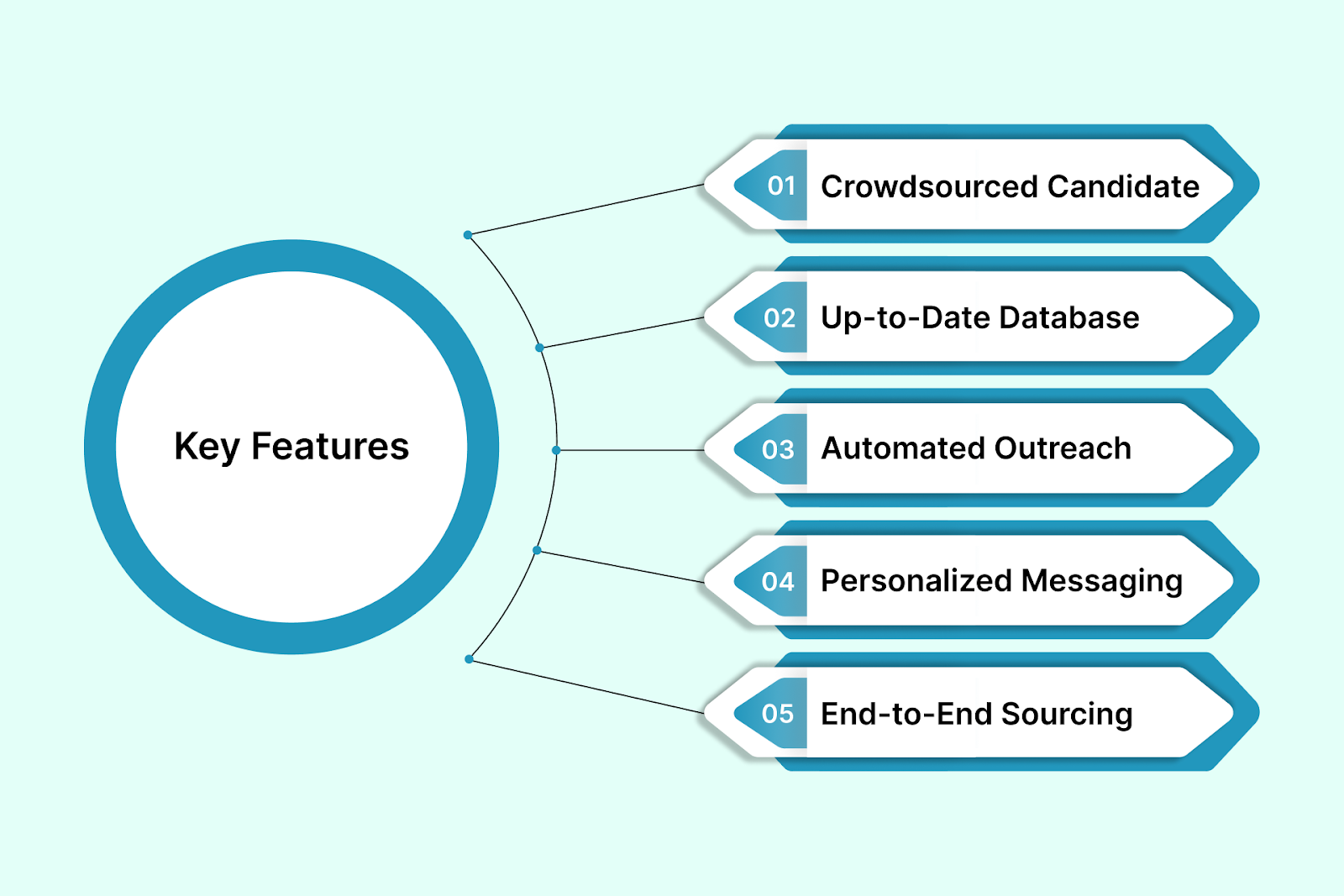
- Crowdsourced Candidate Pipeline: Tap into a carefully curated pool of engineering talent. Weekday’s network of software engineers acts as scouts and mini-recruiters, recommending colleagues they know to be skilled and trustworthy. This gives you genuine, peer-sourced candidate insights.
- Massive, Up-to-Date Engineer Database: Instantly access 800,000+ passive engineers, and 1,500 job-seeking engineers are added to the database every week. You get fresh candidates and more chances to find the right technical skillset.
- Automated Outreach and Drip Campaigns: Effortlessly create and send multi-step outreach sequences—including LinkedIn InMail and email—using automated drip campaigns. Spend less time on manual follow-ups and more time on candidate interviews.
- Personalized Messaging at Scale: Set up customized mailboxes and tailor outreach messages for each role. Automatically deliver personalized contact across all channels to boost candidate engagement.
- End-to-End Sourcing Automation: Weekday manages candidate research, messaging, and engagement, so you don’t miss talent due to outreach delays. Focus your efforts on interviewing and hiring while the platform handles sourcing logistics.
Weekday eliminates hiring guesswork, letting you connect directly with highly verified, crowd-recommended engineering professionals.
Ready to cut your hiring time, boost response rates, and build your team with confidence?
Start your free Weekday trial now and reach 800,000+ engineers—automated, personalized, and built for scale.
FAQs
1. How can small businesses implement a structured HR recruitment process?
Small businesses can start by mapping out each recruitment step, using free or affordable ATS tools, and personalizing candidate communications. Documenting the process—even in simple checklists—makes consistency easier to achieve.
2. What are the latest trends in HR recruitment for 2025?
Current trends include using AI-powered sourcing, virtual interviews, skills-based assessments, and prioritizing candidate experience. Automation and data analytics are also transforming decision-making at every stage.
3. How do you measure the effectiveness of your recruitment process?
Track metrics such as time-to-fill, cost-per-hire, candidate quality, and turnover rates. Regular feedback from both candidates and hiring managers helps identify gaps and improve outcomes.
4. What role does employer branding play in recruitment?
A strong employer brand attracts better candidates and increases offer acceptance rates. Consistently share your culture, values, and success stories across all touchpoints to engage top talent.
5. How do you reduce unconscious bias during hiring?
Structured interviews, standardized scorecards, and diverse hiring panels help minimize bias. Leveraging technology for blind screening can further support fairer outcomes.