
The number of people applying for jobs isn’t slowing down, and most are still stuck in the same cycle of crowded job boards and generic applications. Reaching out directly can set you apart, but many job seekers hold back or struggle to write a message that feels thoughtful and confident.
This guide clears the confusion and helps you write cold emails that get noticed. You’ll learn how to craft messages that capture attention and open doors, with practical tips to make your outreach effective and confident.
What is a Cold Job seeking Email?
A cold job-seeking email is an unsolicited message sent to a hiring manager, recruiter, or potential employer, typically when there’s no active job opening listed.
Unlike traditional job applications, it’s a proactive way to express interest, build a connection, or get on someone’s radar for future opportunities.
Despite evolving hiring practices, cold emailing remains a powerful tool when done thoughtfully, helping job seekers bypass crowded job boards and reach decision-makers directly.
At its core, this strategy shows initiative by demonstrating how your skills or experience align with the recipient's needs, even if they aren’t hiring right now.
Here’s what makes a cold job email effective:
- Personalised and intentional: It’s tailored to the company or person, not a generic message.
- Focused on value: The email highlights what you bring to the table, not just what you’re looking for.
- Clear in its ask: Be it a conversation, feedback, or consideration for future roles, the email includes a simple, actionable next step.
When done right, cold emails can lead to unexpected opportunities, referrals, or valuable professional relationships, all without waiting for a job post to appear. Let’s explore the key types of cold emails every job seeker should have in their toolkit.
Also Read: 10 Free Resume Builders to Use in 2025
A Guide to Writing Job Seeking Cold Emails

By now, you’ve seen how impactful the right cold email can be. But to consistently get responses, it’s important to follow a few core principles, no matter which type you’re sending.
Clarity, brevity, personalisation, and tone all contribute to how your message is received and ultimately, how likely it is to spark a response. Here’s how to write cold emails that feel intentional, respectful, and worth replying to.
- Personalise everything: Generic emails get ignored. Use the recipient’s name, mention specific work or company values you admire, and show that your message is tailored and not mass-sent.
- Be clear about your intent: Be clear about your intent from the start. State it plainly if you're asking for a referral, showcasing your work, or making an introduction. Don’t leave the reader guessing why you’ve reached out.
- The 30 - 30 - 50 rule: One effective guideline to structure your cold email is the 30 30 50 rule to maximise response rates: 30% personalisation, 30% value proposition, and 50% clear call-to-action.
- Keep it short and focused: Most professionals skim emails. Stick to 3–5 sentences max. Remove fluff and focus on what matters: who you are, why you’re reaching out, and what you’re hoping for.
- Show, don’t tell: Instead of saying “I’m a great problem-solver,” link to a project or briefly describe a result that proves it. Credibility matters more than claims.
- Make the ask easy: Be it a referral, a quick call, or just a reply, keep your call-to-action polite, specific, and low-pressure. Think: “Would you be open to a brief chat?” rather than “Can you get me a job?”
- Proofread before hitting send: Typos and formatting issues send the wrong message. Run a spellcheck, read it aloud, and ensure all links work.
Cold emails don’t need to be flashy; they need to be thoughtful, relevant, and respectful of the reader’s time.
However, writing a strong cold email is just one part of getting noticed. But pairing that effort with a platform designed to amplify your visibility can take your job search even further.
Types of Cold Emails for Job Seekers
There’s no single formula for reaching out cold because not every situation calls for the same kind of message. Your email's structure and purpose will differ depending on whether you're reaching out to a company, requesting a referral, or introducing yourself to a recruiter.
Below are the most effective types of cold job emails, along with a few pointers on when to use them and what to include to make them count.
The Direct Job Inquiry Email
This type of email is a direct expression of interest in joining a company. The goal is to highlight how your background aligns with what they typically look for and to plant the seed for future consideration or uncover hidden opportunities.
It’s one of the simplest and quickest ways to introduce yourself and get on a hiring manager’s radar.
What to include
- A strong opening that mentions your interest in the company or a specific team.
- A short summary of your relevant experience or key strengths.
- A line on why you’re reaching out now (e.g., recent company growth, admiration for a recent project, alignment with values).
- A polite ask for a quick chat, to keep your profile on file, or to consider you for upcoming roles.
- Contact information and a link to your resume or portfolio.
Template:
Done right, this email positions you as thoughtful, motivated, and ready to add value, even before a job is posted.
The Referral Request Email
This email is designed to tap into someone’s existing connection with a company you’re interested in, usually an employee, alum, or mutual contact. Rather than using a career portal, you're asking if they can refer you or connect you with someone on the hiring team.
Rather than simply requesting a favour, focus on demonstrating that you’ve done your research, see a strong alignment, and value their help in getting your profile in front of the right people.
What to include
- A polite, personalised intro (mentioning how you found them).
- A sentence or two about your background and relevant experience.
- The specific role or team you’re interested in.
- A clear, courteous ask for a referral or guidance.
- Attach your resume or link to your portfolio/LinkedIn.
Template:
A well-crafted referral request positions you as a prepared and respectful candidate, and someone who is aware of how companies value internal endorsements.
The Mutual Interest or Value Connection Email
This type of cold email relies on a shared, relevant interest between you and the recipient. It could be a common industry, professional network, or mutual focus on similar research or trends. It’s a strategic way to initiate contact by building on common ground, which makes the outreach feel more natural and less transactional.
The aim here isn’t just to ask for a job outright, but to open a conversation around shared ideas, values, or goals that could lead to opportunities down the line.
What to include
- A clear mention of the mutual interest or connection point.
- A brief overview of who you are and why you’re reaching out.
- A line that ties your background or goals to theirs.
- A soft call-to-action, usually an invitation to chat, collaborate, or stay in touch.
Template:
When written well, this sort of email can feel like the start of a genuine professional connection, not a pitch.
The Skills Showcase Email
This email highlights one of your specific projects, achievements, or body of work that aligns with what the company or recipient values. It’s especially effective for roles where demonstrable skills carry more weight than just credentials, like design, engineering, writing, marketing, or product development.
Instead of asking for a job directly, you’re sharing something meaningful you’ve built, researched, or solved, with the intention of sparking interest or starting a conversation.
What to include
- A brief intro explaining why you’re reaching out.
- A concise summary of the project, result, or insight you’re showcasing.
- A link to the work (portfolio, GitHub, case study, etc.).
- A sentence tying your work to what the company is doing.
- A soft CTA: open to feedback, conversation, or future opportunities.
Template:
This type of outreach works well when you admire the company’s work and want to show how your skills are relevant without making a hard ask.
The Follow-Up or “Quick Question” Email
Such an email intends to revive a conversation or prompt a response without overwhelming the recipient. It’s often used after an initial outreach went unanswered, after a networking call, or when you want to re-engage someone with a low-friction request.
Framing your message as a short follow-up or a single, specific question lowers the barrier to reply and shows that you’re respectful of their time.
What to include
- A brief reminder of your previous message or interaction.
- A clear and concise question (e.g., “Is it okay if I send over my resume?” or “Is your team still hiring for [X]?”).
- A polite tone and a short format, ideally under 100 words.
- Optionally, a fresh link or small update to re-spark interest.
- A courteous closing that keeps the door open.
Template:
This approach works especially well with busy recruiters, hiring managers, or contacts who showed initial interest but didn’t follow through.
Each of these cold email types serves a distinct purpose, but they all share one common goal: to make a genuine, thoughtful connection that opens the door to opportunity.
But, before you start drafting your own message, it’s worth understanding a few key principles that separate forgettable emails from the ones that actually get replies.
Also read: Differences Between Recruitment and Hiring Process
How WeekdayWorks Supercharges Your Job Search
WeekdayWorks streamlines your job hunt by automating applications, providing personalised outreach tools, and delivering insights that give you an edge over other applicants.
While traditional job boards list the usual suspects, our platform hunts down off-the-radar startup roles and finds the right point of contact inside the company so your application or email is seen by the right set of eyes.
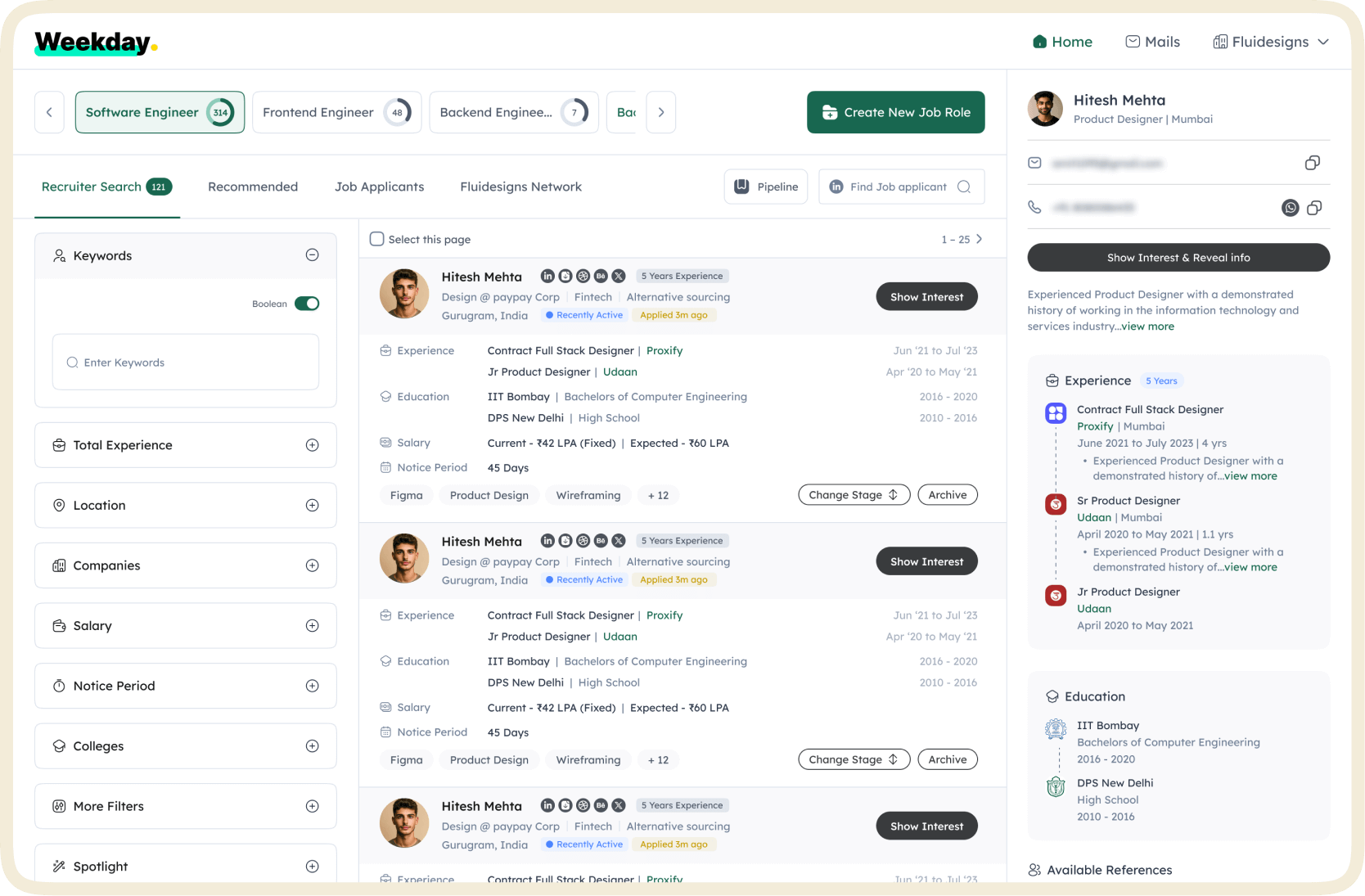
Here’s how WeekdayWorks helps you stay ahead:
- Automated Job Applications: Auto-fill job application forms across the web using Weekday AI.
- Chrome Extension: Send recruiter-ready, personalized emails that are optimized for response.
- Salary Transparency: Search and compare salary data across companies before applying.
- Company Culture Insights: Get real, honest reviews on workplace environments and team dynamics.
- ATS Resume Scorer: Evaluate how your resume stacks up with free AI-powered analysis.
- AI Resume Builder: Build or upgrade your resume using a tool tailored to modern hiring standards.
Final Thoughts
A well-crafted cold email can be your foot in the door, helping you stand out in a saturated job market and build connections that lead to real conversations. How you communicate can make all the difference, and a proactive email is the best place to demonstrate that.
WeekdayWorks amplifies these efforts by automating the tedious parts of job applications and helps you send smarter outreaches. With powerful tools and direct referral access, you’ll know exactly who to contact and how to send job-seeking cold emails that make an impact.
Try WeekdayWorks today to go beyond job boards and take control of your career story. Your next opportunity might be just one smart email away.


