.jpg)
There’s a quiet assumption most hiring teams operate on:
More applicants = better hiring.
So we:
- Post jobs everywhere
- Turn on “Easy Apply”
- Optimize funnels to increase applications
And yet… hiring still feels broken. Because here’s the uncomfortable truth: The best candidates often don’t apply. And the ones who do? Many never even make it through your process.

Your Funnel Is Leaking (Badly)
Let’s start with what’s happening inside your application flow.
- 92% of candidates drop off before completing applications
- 60% abandon due to length or complexity
- Shortening applications can increase conversions by up to 365%
Think about that.
You’re not filtering candidates. You’re losing them before you even meet them. And not just any candidates. The best ones , the ones with options don’t sit through 45-minute forms and 12 dropdowns.
The Bigger Problem: You’re Optimizing for the Wrong Metric
Most teams optimize for:
- Number of applicants
- Cost per application
- Funnel volume
But hiring doesn’t break because of low volume.
It breaks because of:
- Low signal
- Slow screening
- Poor candidate experience
In fact, many teams only review a small portion of applicants — sometimes as low as 10% of the pool
Which means: The best candidate might already be in your pipeline. You just never saw them.
Why “More Applications” Makes Hiring Worse
It sounds counterintuitive, but more applicants often create:
- More noise → harder to identify quality
- Slower decision-making → candidates drop off
- Biased filtering → top talent missed
You don’t get better hires. You get whoever made it through first.
What High-Performing Teams Do Differently
Instead of chasing volume, they optimize for access and signal.
1. They Start With Qualified Talent
Rather than relying only on inbound, they tap into curated candidate pools.
That’s why models like Weekday Subscription Access are becoming more common — you start with candidates who are already vetted and relevant. No cold start. No guesswork.

2. They Don’t Depend on Applications Alone
The best candidates:
- Aren’t actively applying
- Are selective about where they engage
So top teams combine:
- Outbound
- Referrals
- Warm pipelines
Often executed through structured systems like Weekday Modern Recruiting Agency that go beyond just posting jobs.

3. They Fix Screening, Not Just Sourcing
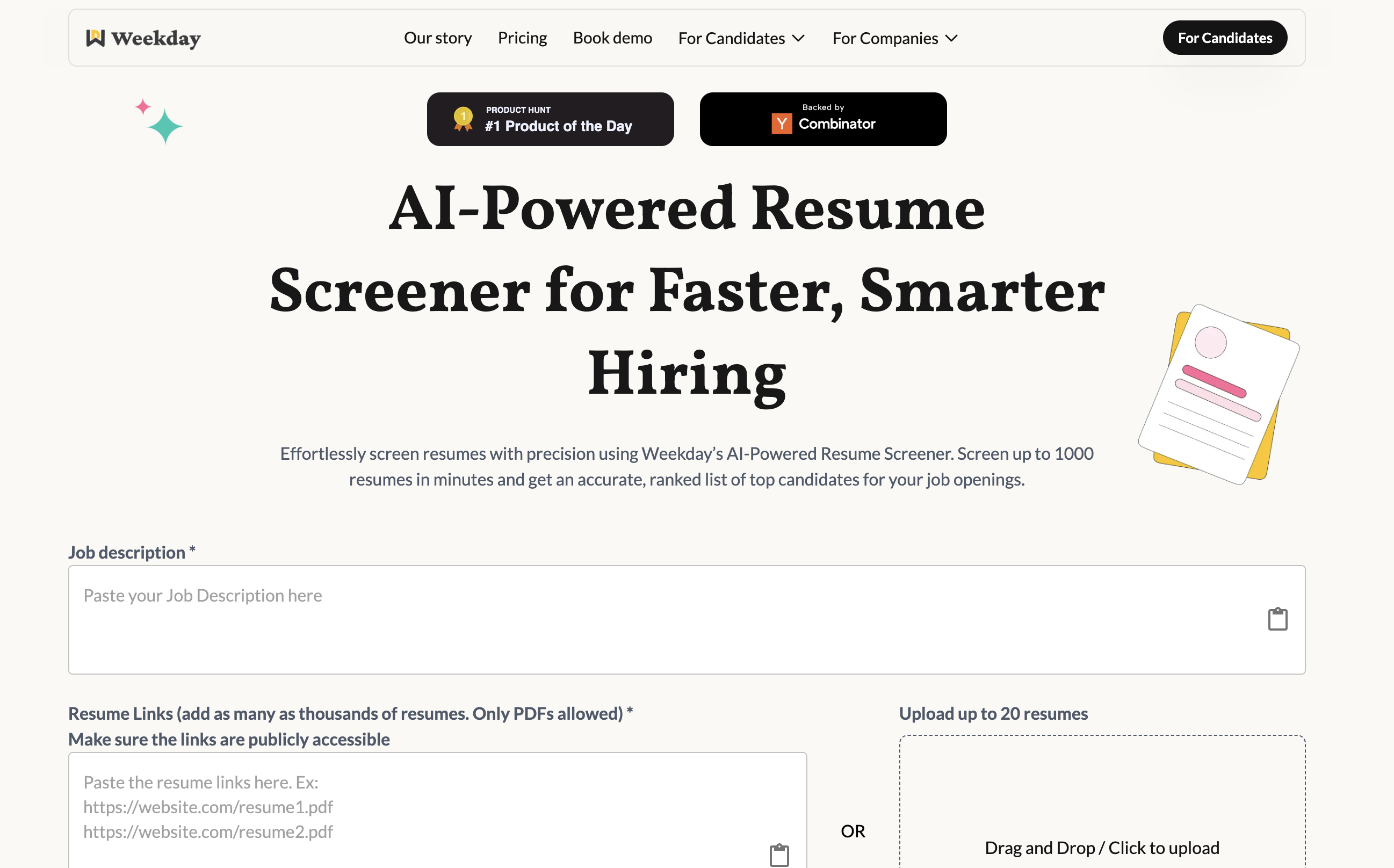
Even when great candidates apply, they often get buried under volume. Instead of manually reviewing hundreds of resumes, teams are moving toward faster filtering systems -
tools like Weekday Resume Screener help surface actual signal early.
4. They Build Hiring Infrastructure (Not Just Pipelines)
Hiring isn’t a one-time activity anymore. It’s a system:
- Pipelines
- Screening layers
- Outreach workflows
And for many teams, building this internally is slow — which is why models like Weekday Deployed Solutions exist to set this up end-to-end.
The Shift You Need to Make
Instead of asking:
“How do we get more applicants?”
Start asking:
- Are the right candidates even seeing this role?
- How many are dropping off before applying?
- How many are we actually reviewing?
- How fast are we moving once they enter the funnel?
Where This Leaves You
If your current approach is:
Post job → collect applications → screen → hire
You’re optimizing for the easiest part of hiring. Not the most important one. The teams getting ahead are doing something simpler:
- Reducing reliance on cold applications
- Starting with better candidate pools
- Moving faster with better signal
And as a result they’re not waiting for the best candidates to apply.