.jpg)
When a Series A startup needed to scale its engineering team, they ran into a problem that didn’t look obvious at first: they had enough candidates, but not enough of the right ones.
Like most teams, they relied heavily on job boards and inbound applications. Roles would get hundreds of applicants within days. But after multiple hiring cycles, a pattern became clear — the pipeline looked full, but the quality wasn’t where it needed to be.

The problem: hiring from a limited pool
Most of their candidates came from:
- Job posts
- Easy Apply
- Inbound interest
Which meant they were only seeing people who were actively applying.
The strongest candidates they wanted — people already doing good work at solid companies — weren’t showing up in the funnel at all.
The shift: expanding beyond inbound
Instead of trying to improve applications, the team decided to change how they sourced candidates.
They started using Weekday Subscription Access after hearing about it from other founders.

The onboarding was straightforward. Within a short time, they were able to:
- Search for candidates across companies, roles, and skill sets
- Build targeted lists instead of relying on inbound
- Access direct contact details to reach candidates
The biggest change was simple: they were no longer limited to who applied.
Reaching candidates who weren’t actively applying
One of the biggest challenges with passive candidates is getting them to respond.
Instead of relying on one-off outreach, Weekday handled this as a system:
- Multi-channel communication (email, WhatsApp, calls)
- Built-in follow-ups
- Messaging aligned to candidate profiles
This made a noticeable difference.
“We started getting responses from people who wouldn’t have applied otherwise, but were open to a conversation.”
Making screening faster and more consistent
As sourcing expanded, so did the number of profiles.
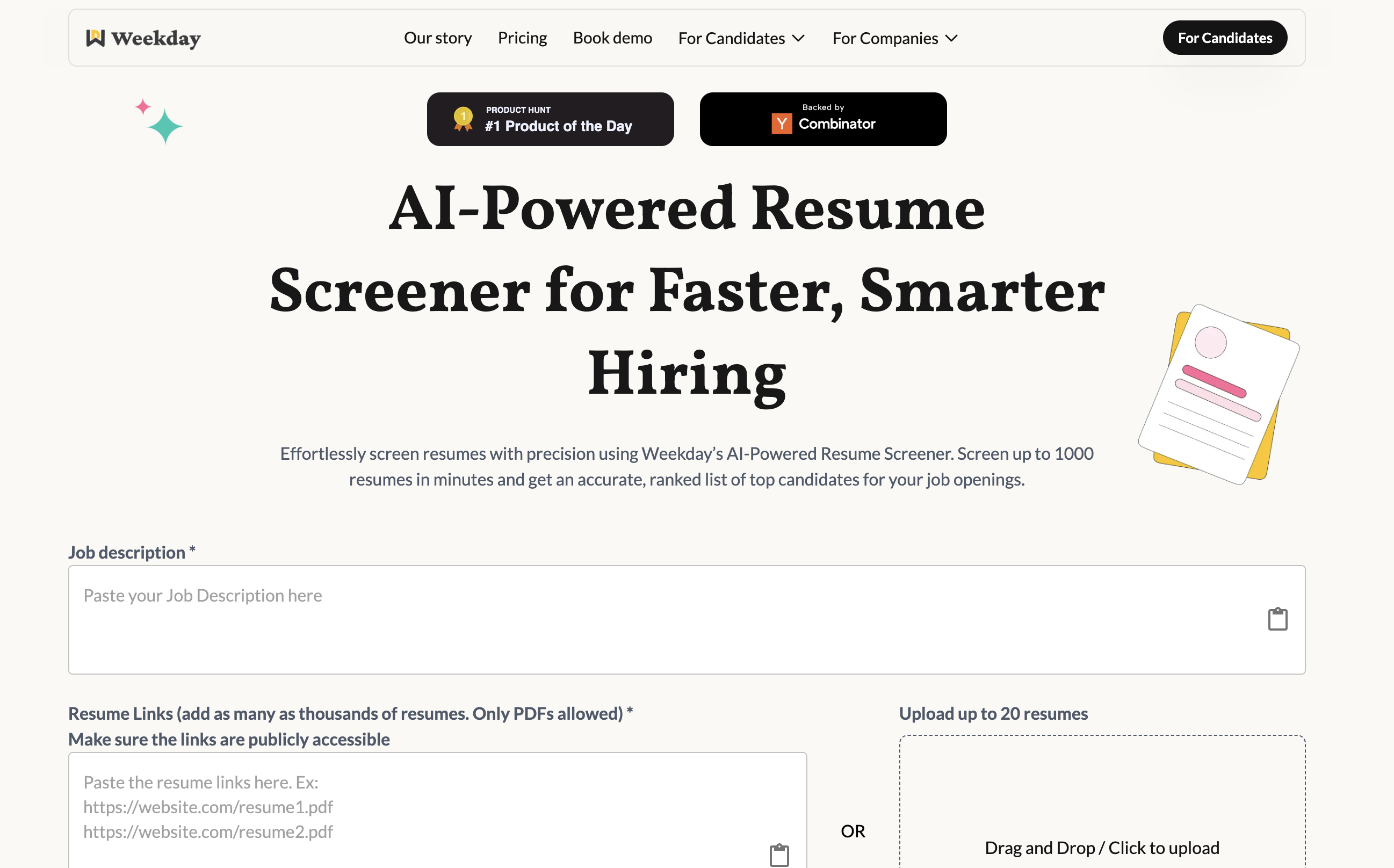
To manage this, they used Weekday Resume Screener.
This helped:
- Prioritize candidates based on relevance
- Reduce time spent manually reviewing resumes
- Create shortlists faster
Instead of going through hundreds of profiles, the team could focus on a smaller, more relevant set.
Reducing internal bandwidth on hiring
As hiring picked up, the founders found themselves spending more time on recruiting than expected.
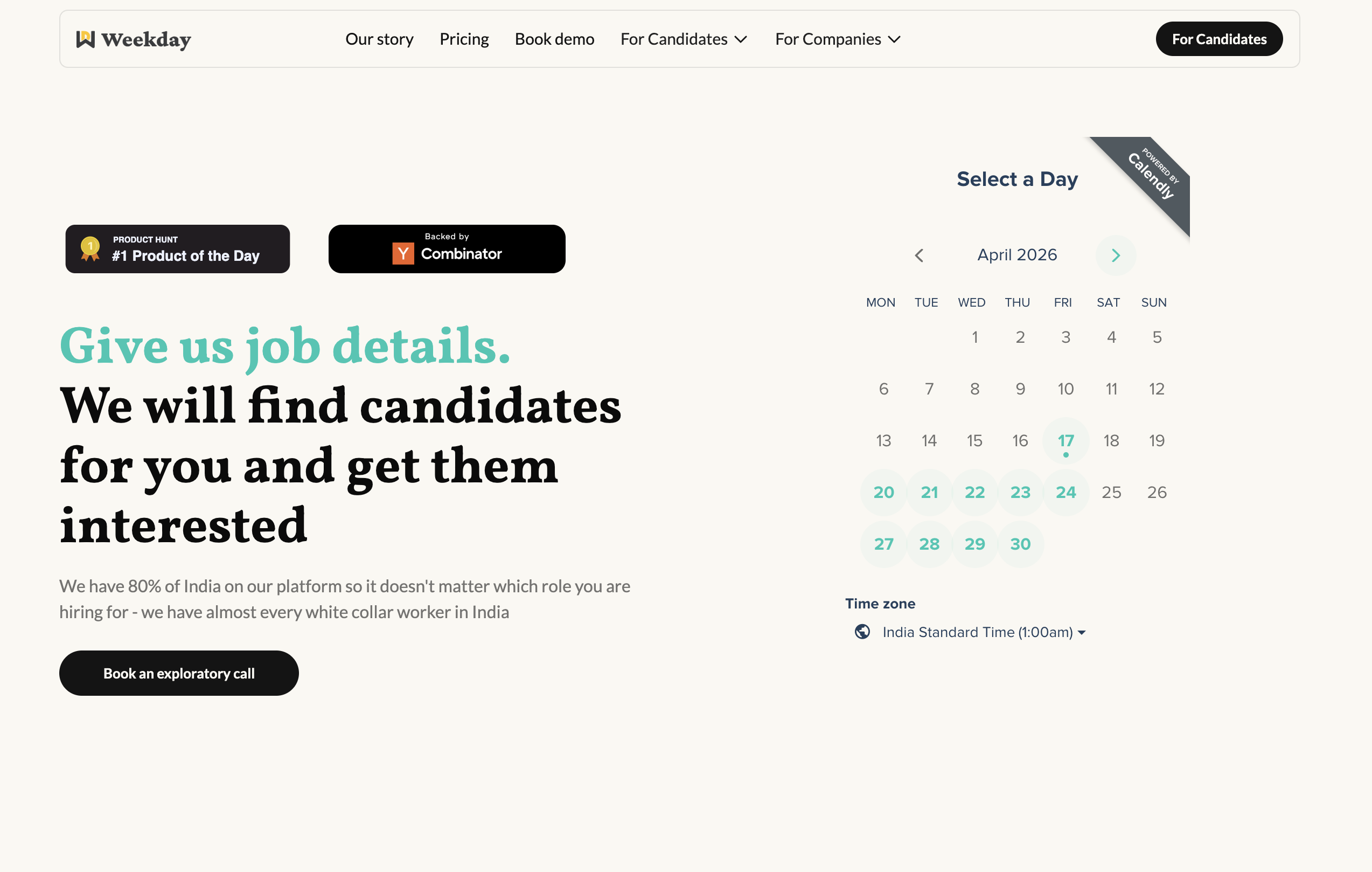
They moved parts of the process to Weekday Modern Recruiting Agency.
This allowed them to:
- Offload sourcing and outreach
- Receive candidates who had already shown interest
- Spend more time on interviews and decision-making
Handling more complex roles
For harder-to-fill roles, they needed a more focused approach.
They used Weekday’s AI sourcing agent to:
- Target specific talent pools
- Run structured outreach
- Build a more deliberate hiring process for niche roles
The outcome
After a few weeks:
- A larger share of candidates came from outbound sourcing
- Candidate quality improved across roles
- Screening became faster and more manageable
- Hiring felt more structured and predictable
Final takeaway
Before Weekday, hiring depended on who applied.
After Weekday, hiring depended on who they chose to reach.
That shift — from inbound to access — is what changed the quality of their pipeline.
How to spot the hidden market problem in your own pipeline
You probably have this problem if two or more of these sound familiar:
- Roles get hundreds of applicants, but fewer than 1 in 20 make it to a first interview.
- Your best past hires came from referrals or someone you reached out to, not from job posts.
- The same senior roles reopen every quarter because offers keep falling through.
- Hiring managers say “we’re not seeing the right people,” even when volume looks healthy.
A simple way to start reaching passive candidates
- Pick one hard role. Start with the role that has been open longest, not your whole hiring plan.
- Write down the 10 companies you would hire from. Example: for a backend lead, list the teams whose products you respect.
- Build a short list of 50–100 people currently doing that job at those companies.
- Reach them on more than one channel. Email first, then a WhatsApp nudge. Most passive candidates miss a single email.
- Track replies, not applications. A 30% reply rate on 100 strong profiles beats 500 random applicants.
If you want this done for you, Weekday’s AI finds best-fit candidates and reaches them over email and WhatsApp, so you only talk to people who are interested. Post a job free or book a demo.