.svg)
.png)
Are you looking to elevate your engineering team with a seasoned tech lead? A tech lead bridges deep technical expertise with leadership, steering architecture decisions, mentoring developers, and ensuring project success.
Demand for technical leads is robust—global openings grew by 17.9% from 2016–2026, per the U.S. Bureau of Labor Statistics.
You need someone who not only codes but also defines standards, removes blockers, and aligns technology with business goals. This guide outlines the core responsibilities, required skills, and hiring best practices for a standout tech lead job description.
Key Takeaways
- A tech lead sets technical direction, mentors engineers, and oversees code quality while contributing hands-on to development.
- Essential skills include software architecture, cross-team communication, and strategic problem-solving.
- Hiring success hinges on clear job postings, rigorous technical interviews, and strong onboarding + retention strategies.
- Leverage Weekday’s referral-vetted talent pool to find peer-approved tech leads quickly and confidently.
Who Is a Tech Lead?
A tech lead combines hands-on development with leadership. You’re not just recruiting a senior engineer; you need someone who:
- Defines architecture and standards to ensure scalable, maintainable code.
- Guides team members through technical challenges and career growth.
- Bridges stakeholders and developers, translating business needs into technical designs.
Tech leads typically have 5+ years of development experience and excel at balancing coding, code reviews, and strategic decisions. Their influence shapes software quality, team morale, and delivery timelines.
Also Read: Roles and Responsibilities of a Software Test Lead Job
Core Tech Lead Responsibilities
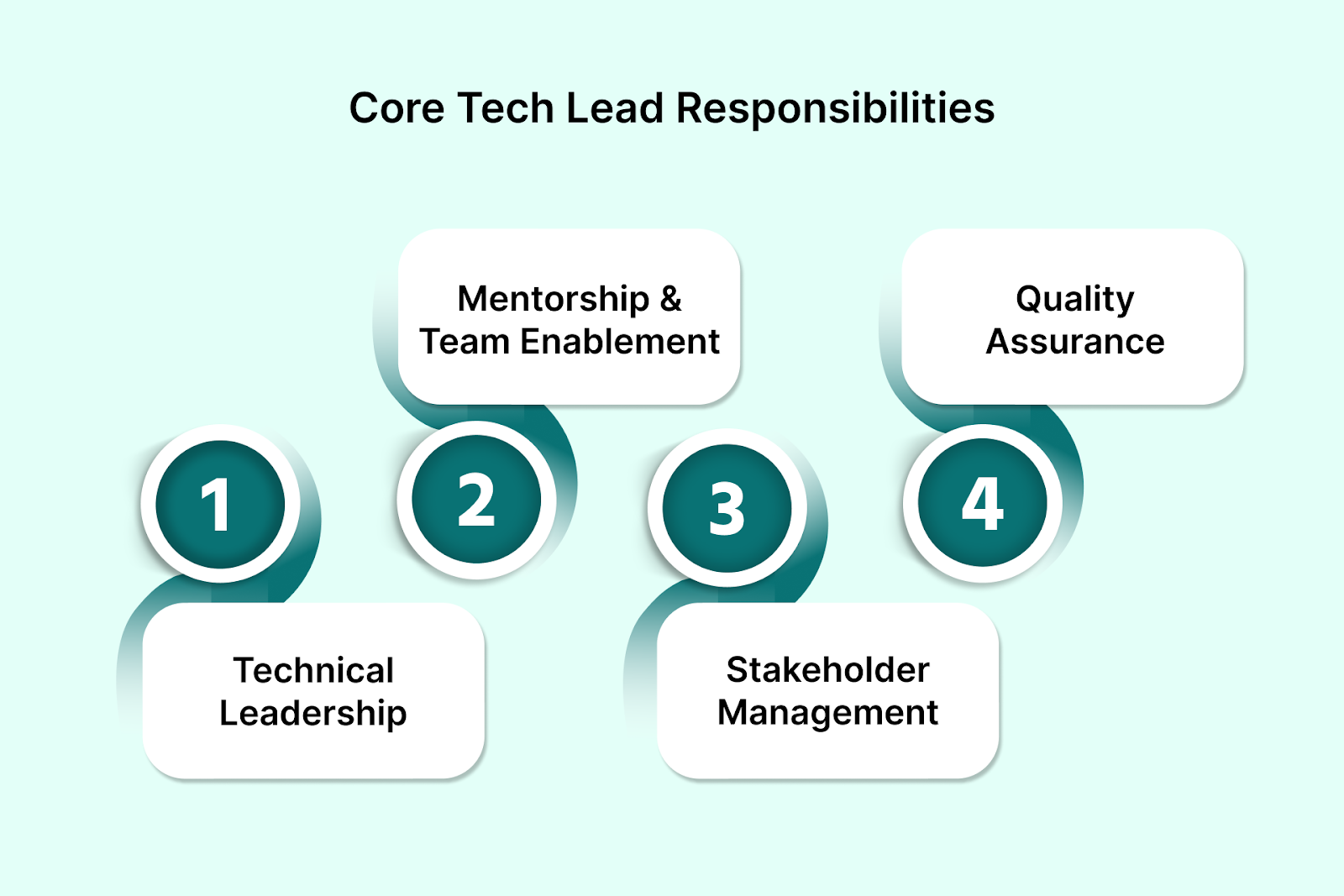
If you’re hiring a tech lead, you’re searching for more than an architect or a senior engineer—you want a leader who turns business goals into technical solutions while building trust across your engineering team.
Let’s break down the diverse duties your tech lead must own to deliver strong results and elevate your organization.
A. Technical Leadership & Development
1. Architecture & System Design
Your tech lead sets the technical direction. They select frameworks, define scalable architecture, and ensure the system is resilient and maintainable.
For every major project or feature, the tech lead weighs trade-offs: Should you use microservices or stick to a monolith? Cloud-native or on-premises?
They’ll draft diagrams, write design documents, and communicate decisions so every developer understands the “why” behind your tech stack.
2. Hands-On Coding
Even as a leader, a tech lead dives into the codebase, especially for the trickiest features—think proof-of-concepts, core infrastructure, or performance-critical portions.
They model best practices through clean, well-documented pull requests and consistently review code, catching issues early and coaching team members on both technical skills and coding style.
3. Enforcing Technical Standards
Tech leads are the guardians of quality. They lay out rules for testing, code coverage, style guides, release checklists, and documentation. This standardization reduces bugs, improves onboarding efficiency for new hires, and creates a culture of pride in craftsmanship.
B. Mentorship & Team Enablement
1. Coaching One-on-One
Growth happens through feedback. A great tech lead regularly sits down with each team member to review both work and professional aspirations. They set actionable goals, help developers overcome blockers, and encourage engineers to stretch beyond their comfort zone.
2. Knowledge Sharing
A high-performing team shares knowledge freely. Your tech lead hosts technical workshops, runs brown-bag sessions where innovations are discussed, and ensures documentation is always up to date. This consistent sharing boosts team capability and keeps information from becoming siloed.
3. Conflict Resolution
Disagreements over the “right” way to solve a problem are inevitable. Your tech lead mediates tensions and drives team consensus, always prioritizing company goals and customer success over personal opinion.
C. Project & Stakeholder Management
1. Technical Roadmapping & Planning
Tech leads collaborate closely with product managers and stakeholders to turn product visions into clear technical roadmaps. They break down roadmaps into actionable user stories and sprints, thoughtfully estimating effort and identifying potential risks up front.
2. Progress Reporting
They make sure leadership isn’t surprised by delivery delays or technical risks. Tech leads communicate status updates, blockers, and resolution plans to non-technical audiences—bridging business and engineering.
3. Cross-Functional Alignment
Modern products rely on cross-team alignment. A tech lead coordinates with backend and frontend teams, QA, SRE/DevOps, and UX design, ensuring dependencies are managed and releases happen smoothly.
D. Quality Assurance & Continuous Improvement
1. Code Quality & Automation
Tech leads introduce and enforce automation—static code analysis, unit and integration testing, and automated deployments—so your product grows stable and can scale without friction.
2. Monitoring & Improving System Performance
They establish robust monitoring for errors, latency, and uptime. Regular performance reviews and load testing ensure that products stay fast and reliable even as your user base grows.
3. Security & Compliance
Your tech lead is responsible for keeping data and systems safe. They implement secure development practices, educate the team on risks, and regularly review code for vulnerabilities or non-compliance with industry standards.
Also Read: Technical Support Engineer Job Description Template for Hiring Success
Essential Technical Skills for Tech Leads
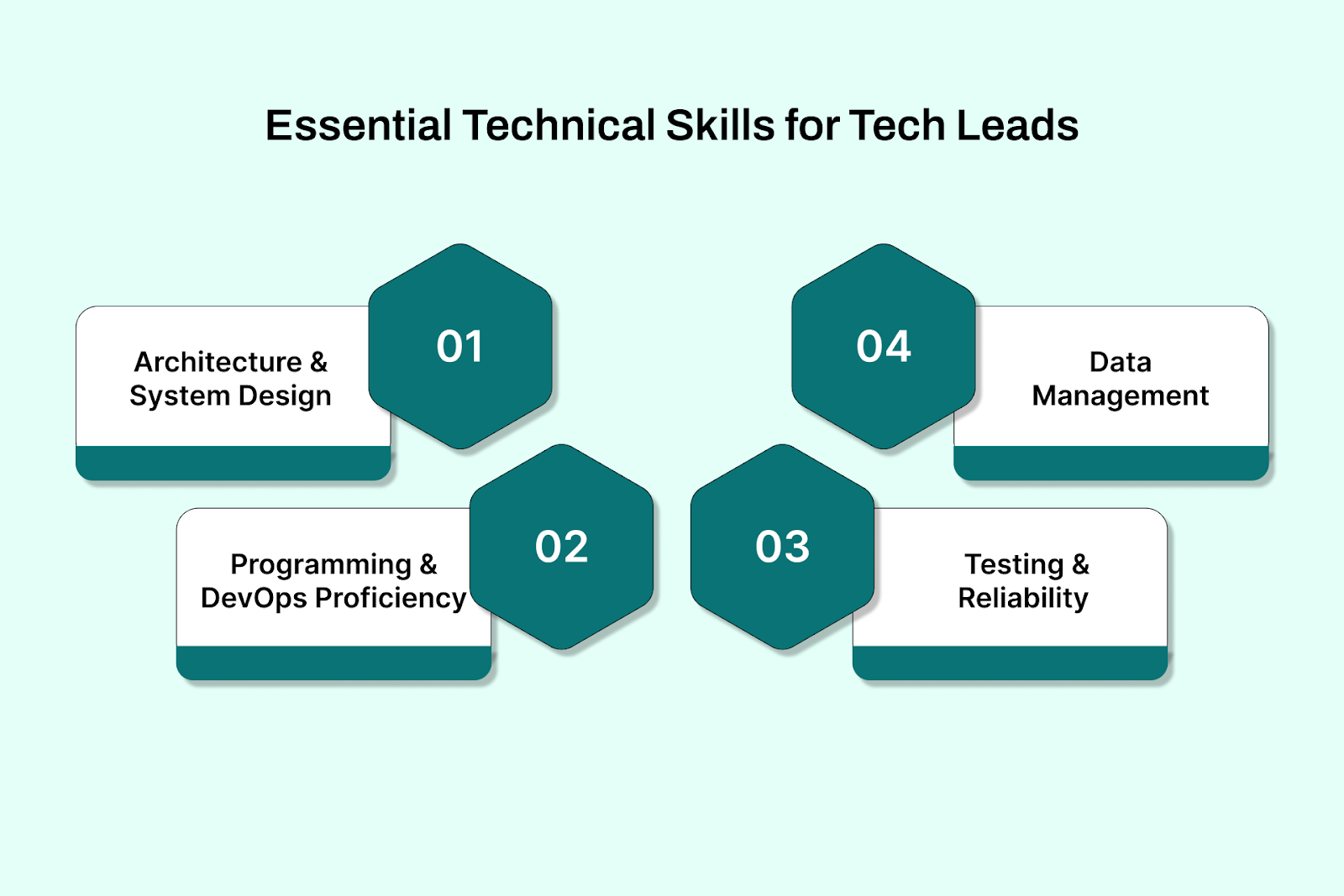
1. Software Architecture & System Design
- Microservices vs Monolith design
- Scalability patterns (CQRS, Event Sourcing)
- Cloud architecture (AWS, GCP, Azure)
2. Programming & DevOps Proficiency
- Mastery in primary backend language (Java, Python, Node.js)
- Containerization (Docker, Kubernetes)
- CI/CD tools (Jenkins, GitHub Actions)
3. Testing & Reliability
- Unit, integration, and end-to-end testing frameworks
- Chaos engineering and resilience testing
4. Data Management
- Database design (SQL, NoSQL)
- Caching strategies (Redis, Memcached)
- Message queues (Kafka, RabbitMQ)
Soft Skills & Professional Competencies
A. Communication & Collaboration
- Translate complex tech concepts into business terms.
- Facilitate productive design reviews and retrospectives.
B. Analytical & Problem-Solving
- Root-cause analysis of production issues.
- Data-driven decision-making and A/B testing.
C. Adaptability & Learning
- Stay current with emerging technologies (AI/ML, serverless).
- Mentor team on new tools and best practices.
Required Qualifications & Education
A. Educational Background
- Preferred: Bachelor’s/Master’s in Computer Science or related field.
- Acceptable: Bootcamp graduates with robust portfolios.
B. Certifications & Training
- Cloud certifications (AWS Solutions Architect, GCP Professional Cloud Architect).
- Architecture credentials (TOGAF, Certified Kubernetes Administrator).
C. Portfolio Requirements
- Public GitHub showing large-scale contributions.
- Architecture docs and RFCs.
- Conference talks or technical blog posts.
Also Read: Understanding the Roles and Jobs of a Technical Engineer
How to Hire a Tech Lead
Hiring a tech lead is a pivotal decision; you need someone who can influence your product’s direction, inspire engineers, and deliver on ambitious business goals.
Here’s a step-by-step approach tailored to help HR leaders, founders, and engineering managers secure the right tech lead for their company.
A. Job Posting Optimization
1. Define Role Clarity
Be specific in your tech lead job description. Differentiate the role from an engineering manager or senior engineer. State how much hands-on coding versus people leadership is expected.
Define whether your tech lead will oversee one squad, multiple teams, or play a company-wide architecture role.
2. List Must-Have Skills and Experience
Spell out the critical requirements: e.g., experience designing scalable systems, leading code reviews, setting up DevOps pipelines, mentoring junior engineers, and managing cross-team projects.
Clearly outline expertise in relevant programming languages, cloud platforms, and architectural patterns that fit your stack.
3. Highlight Culture and Growth Opportunities
Share what makes your company unique: your mission, team structure, learning culture, and the tech challenges ahead. Top tech leads want to solve meaningful problems, influence direction, and grow their own skills.
4. Be Transparent About Compensation and Benefits
Tech leads are in demand—be open with your salary ranges and total rewards. Competitive compensation, professional development budgets, equity, and flexible work policies attract the best candidates.
B. Interview Process Best Practices
1. Rigorous Technical Assessment
Set up a combination of technical interviews—system design sessions that simulate real product scenarios, live code walkthroughs, and architecture trade-off discussions.
Evaluate their ability to break down complex requirements, evaluate pros and cons, and communicate clearly under pressure.
2. Portfolio & Past Impact Review
Ask candidates to share code samples, architecture documents, and examples of how they influenced previous teams.
Explore their thought process behind key technical decisions: Why did they adopt certain frameworks? How did their code reviews raise team standards? Review technical blog posts or conference presentations for added insight.
3. Behavioral and Leadership Interviews
Use situational questions to gauge soft skills:
- How do you handle disagreements on tech direction?
- Describe a time you coached a struggling engineer.
- Tell us about leading a project that went off track—what did you do to realign?
4. Cross-Functional Panel Interviews
Have product managers, designers, and other engineers participate. A great tech lead aligns with stakeholders across disciplines, not just within engineering.
C. Onboarding & Retention Strategies
1. Structured Onboarding for Early Impact
Design a 30-60-90 day plan. Cover:
- Deep dives into your codebase and architecture
- Introductions to team members and key stakeholders
- Early wins (fixing a critical bug, proposing an architecture improvement, or mentoring a junior dev)
- Assign a “buddy” for guidance, and offer access to all necessary tools, documentation, and systems from day one.
2. Foster Growth and Belonging
Provide ongoing mentorship, regular feedback sessions, and clear advancement tracks. Fund tech conferences, continuous learning, or hackathons. Celebrate contributions—well-run retros and public recognition of major wins boost morale and retention.
3. Stay Competitive
Review salaries and benefits regularly. Tech leads get multiple offers; don’t lose yours by being slow or inflexible.
4. Involve Them in Big Decisions
Invite your new tech lead to planning meetings, roadmap workshops, and retros. Give them a voice in shaping not just the software, but your company’s technical path.
Also Read: Effective HRM Recruitment Methods for Top Talent Hiring
Tech Lead Job Description Template
Here’s a ready-to-use job description template to help you attract a skilled tech lead. Customize it according to your company’s needs and culture.
Ready to craft a job description that attracts exceptional tech leads?
Use Weekday’s free Tech Lead Job Description Generator to create tailored postings in minutes.
Try it now at Weekday Tech Lead JD Generator.
Hire a Tech Lead with Weekday?
Hiring the right tech lead is crucial—your project's architecture, delivery speed, and team morale depend on it. Weekday makes this process faster and more reliable by leveraging the power of AI and peer validation.
Data-Driven, Peer-Verified Tech Leads
Weekday offers access to over 30 million professional profiles, covering nearly 80% of India’s white-collar workforce. As of 2025, more than 120 tech-driven companies trust Weekday to hire tech leads and senior engineers.
What sets Weekday apart?
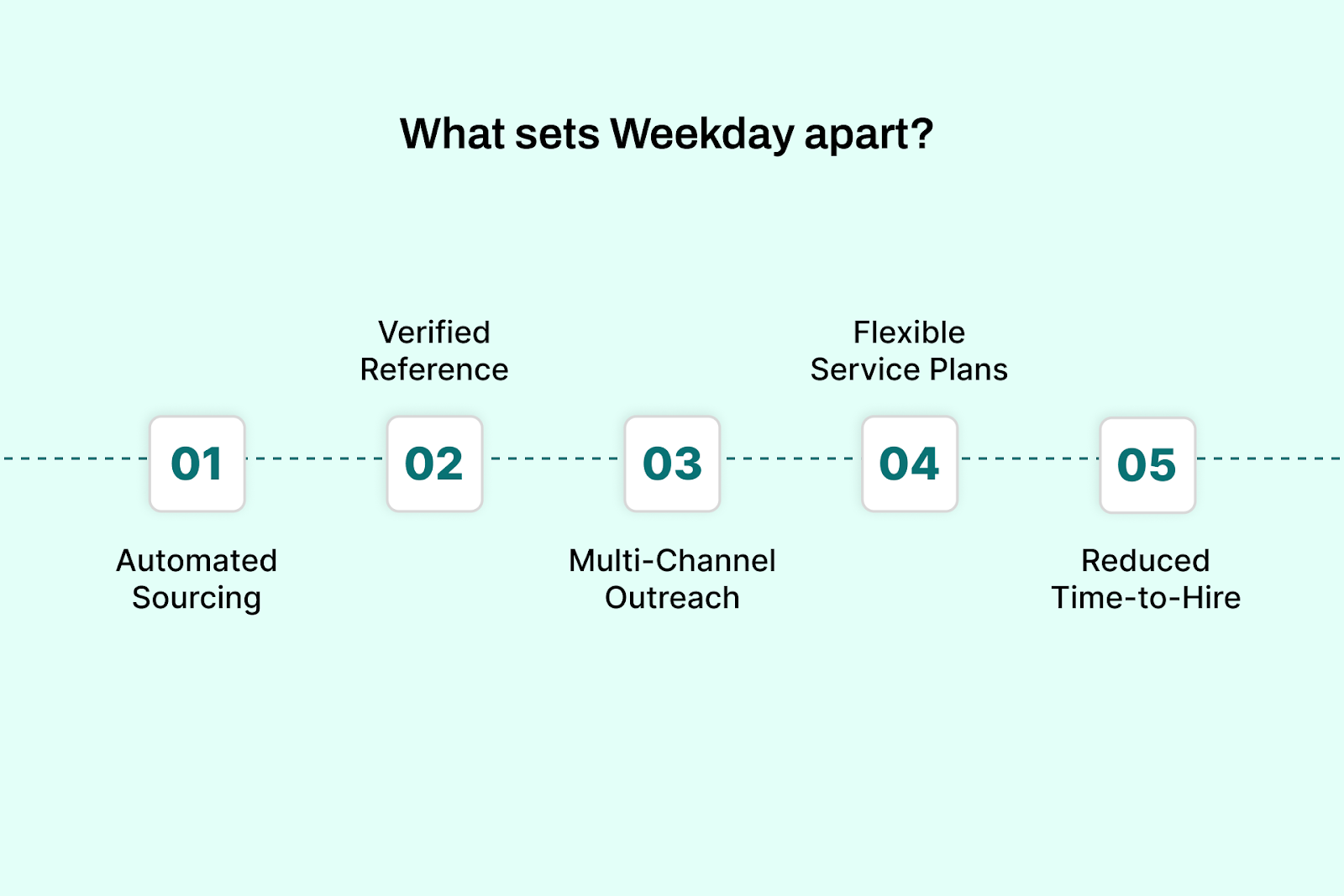
Every candidate is crowdsourced through an exclusive network and vouched for by fellow engineers, not just resumes. This peer-reference system ensures you see top-tier, trusted talent who may never apply on job boards.
- Automated Sourcing: Instantly match your tech lead job description with professionals who excel in system architecture, coding standards, and leadership through active and passive candidate pools.
- Verified Reference Checks: Weekday’s unique “Backchannel” feature provides discreet, real-world references from previous colleagues, ensuring your next hire is battle-tested and culture-fit.
- Multi-Channel Outreach: AI automates communication via email, WhatsApp, and calls to reach candidates fast, including those not actively job hunting.
- Flexible Service Plans: Use subscription access or a “white glove” end-to-end hiring service for urgent or bulk hiring needs.
- Reduced Time-to-Hire: Weekday’s approach reduces time-to-hire by up to 40% compared to traditional recruiting, thanks to automation and immediate reference-validated matching.
The Trust Factor
Less than 5% of companies use real peer references to make hiring decisions—yet this is the factor that best predicts real-world leadership performance.
Weekday changes that. In as little as four days, you receive curated candidates with ready-to-call references and immediately actionable interview calendars, eliminating guesswork and risky hires.
Ready to find your next tech lead the smart way? Discover peer-verified leadership talent and speed up your hiring with Weekday.
Frequently Asked Questions
Q1: What’s the difference between a tech lead and an engineering manager?
A tech lead focuses on architecture, code quality, and hands-on mentorship. Engineering managers handle headcount planning, performance reviews, and cross-team coordination.
Q2: Is coding still required for a tech lead?
Yes. While leadership is key, tech leads allocate ~30% of their time to coding critical features and overseeing complex merges.
Q3: What is the ideal experience level?
Five to ten years of software development, with 2+ years in a senior or architect role, is standard.
Q4: How do I assess architecture skills?
Use a system design interview to evaluate trade-off analysis, scalability planning, and security considerations.
Q5: Can I hire remotely?
Absolutely. Weekday’s global database and peer validation remove geographic barriers, ensuring you find the right tech lead everywhere.