.svg)
Are you seeking a skilled mobile engineer to build high-performing apps? Mobile engineers play a vital role in developing, optimizing, and launching responsive applications for iOS and Android platforms.
The demand for mobile engineers is growing rapidly, with the job market expected to expand by 17% through 2028, according to the U.S. Bureau of Labor Statistics.
Companies need experts who understand user experience, security, and efficient coding to deliver seamless mobile solutions.
This guide breaks down the key responsibilities, essential skills, and career paths you should know when hiring or becoming a mobile engineer.
Key Takeaways
- Hiring a mobile engineer is essential for any business aiming to deliver high-quality, secure, and user-friendly mobile applications.
- A top mobile engineer brings technical mastery in iOS and Android development, expertise in performance optimization, and strong collaboration skills.
- Effective hiring involves clear job descriptions, rigorous technical assessments, and engaging onboarding and retention strategies.
- Weekday streamlines the hiring process, offering peer-verified talent and smart automation to help you connect with the right engineers quickly.
What is a Mobile Engineer?
A mobile engineer is responsible for designing, developing, and maintaining applications for smartphones and tablets on platforms like iOS and Android.
You’re not just searching for someone who can code; you want a professional who can transform user needs into intuitive digital experiences.
This means handling everything from building adaptive interfaces to optimizing app performance and ensuring airtight security.
Mobile engineers collaborate closely with designers, product managers, and other developers to deliver seamless and visually engaging products. Their work shapes how users interact with your brand daily, making this role a core pillar of your tech team.
If your goal is to deliver apps that delight users and scale with your company, understanding the unique capabilities and mindset of a mobile engineer is the first step.
Core Responsibilities of a Mobile Engineer
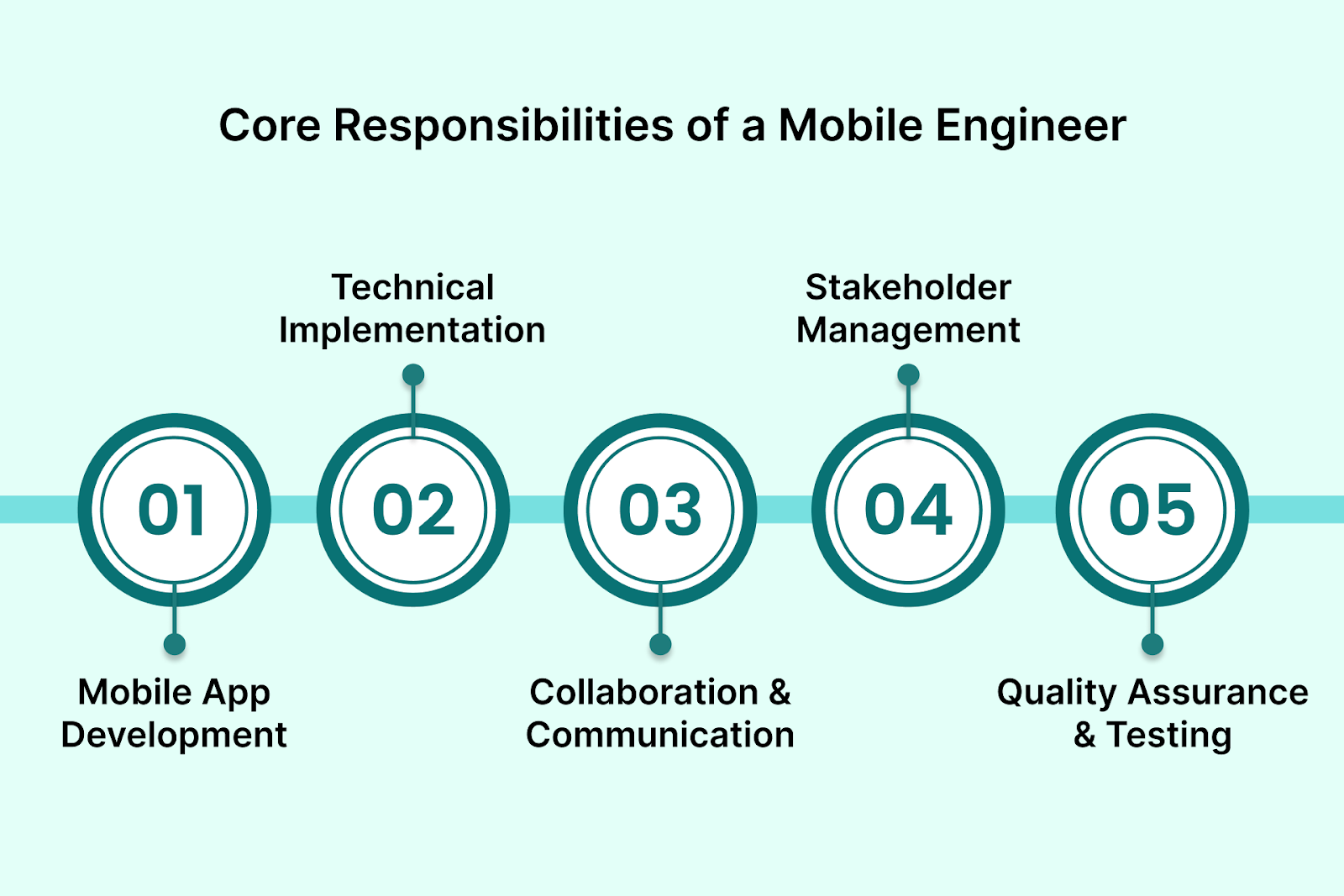
When you hire a mobile engineer, you expect someone who not only writes code but also drives the entire app development journey. Let's break down what this role covers.
1. Mobile Application Development
A mobile engineer builds native applications for iOS and Android, ensuring they perform flawlessly on each device. They may also work on cross-platform apps, delivering consistent experiences regardless of the operating system.
From concept to deployment, the mobile engineer manages the application lifecycle—designing, developing, testing, and launching the app.
Code optimization is vital to make sure your app runs smoothly without draining the device's battery or storage.
2. Technical Implementation
Your mobile engineer will write clean, maintainable code that’s easy to update as your app grows. They transform wireframe designs into real, interactive interfaces and connect apps to databases and APIs for dynamic functionality.
Debugging and performance tuning are ongoing responsibilities to fix bugs and ensure fast, reliable app behavior.
3. Collaboration & Communication
Mobile engineers rarely work in isolation. They collaborate closely with UX/UI designers to create user-friendly interfaces and with product managers to align development with business goals.
Coordination with backend developers is critical for integrating server-side components. Additionally, working with QA teams guarantees quality through thorough testing before release.
4. Stakeholder Management
A mobile engineer also acts as a technical advisor, guiding junior developers and participating in client discussions to gather requirements effectively.
They manage project timelines, monitor progress, and document developments to keep stakeholders informed.
5. Quality Assurance & Testing
Ensuring an app’s quality involves implementing unit tests and UI tests to catch issues early. Mobile engineers identify bugs, analyze performance bottlenecks, and assess security vulnerabilities.
Finally, they handle app store deployments and follow up on necessary updates and maintenance to keep the app competitive.
If your team overlooks any of these responsibilities, user experience (and your brand reputation) will suffer. With so much riding on mobile apps, the right engineer ensures everything runs as intended, every tap, swipe, and screen.
Also Read: Crafting the Perfect Engineering Manager Job Description
Essential Technical Skills for Mobile Engineers
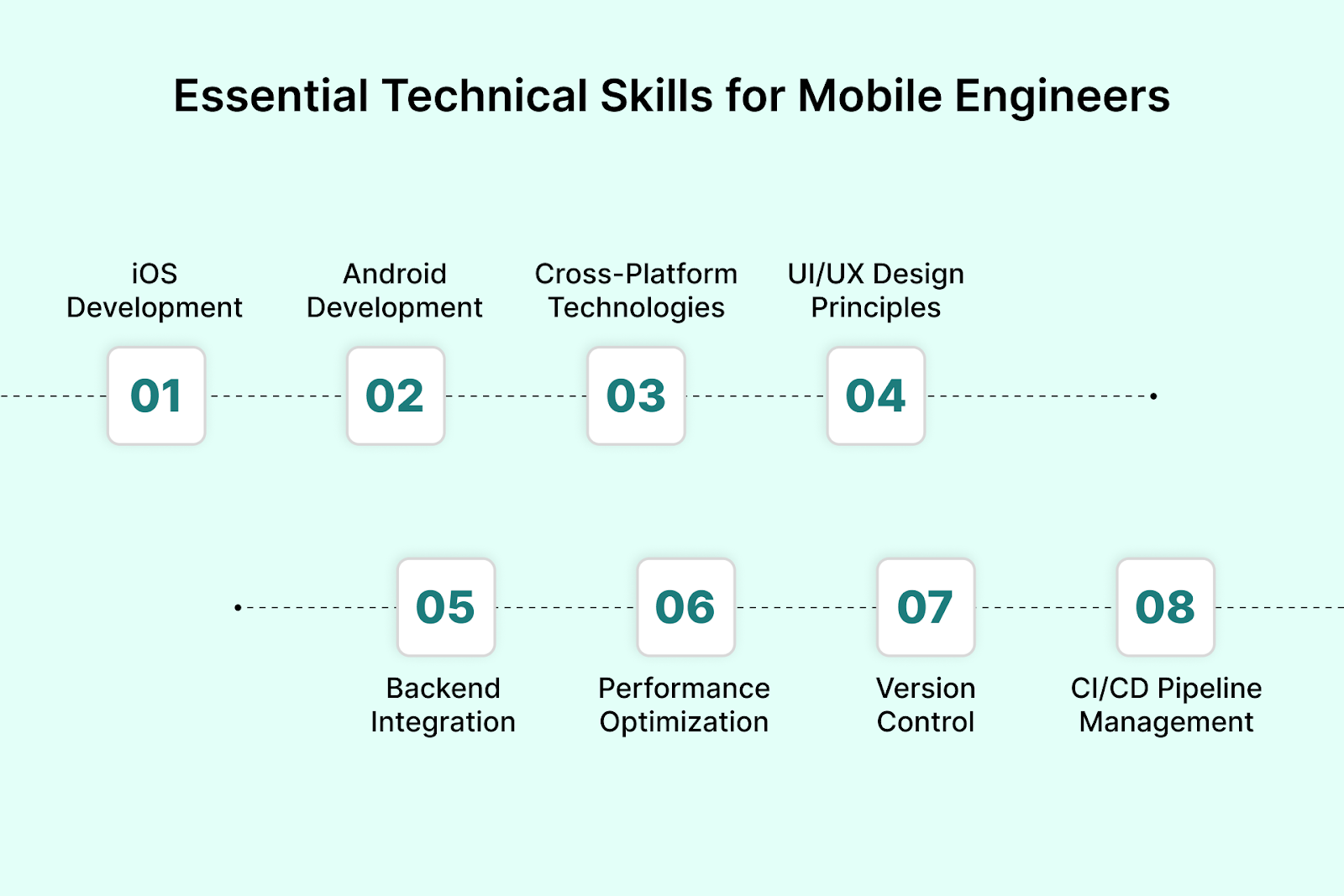
To hire or become a standout mobile engineer, you need a solid grasp of both core languages and specialized tools. Let’s dive into the must-have technical skills.
Programming Language Proficiency
1. iOS Development
- Swift: Your go-to language for modern iOS apps.
- Objective-C: Supports legacy code and older libraries.
- iOS SDK & Frameworks: Familiarity with UIKit, Core Data, and Combine.
- Xcode: Expert at debugging, Interface Builder, and simulator workflows.
2. Android Development
- Kotlin: Preferred for concise, safe code.
- Java: Essential for maintaining existing Android projects.
- Android SDK & Studio: Mastery of layouts, services, and Android Jetpack.
- Gradle: Build scripts and dependency management.
3. Cross-Platform Technologies
- React Native: Build native-style apps using JavaScript.
- Flutter: Create high-performance UIs with Dart.
- Xamarin: C#-based, share code across devices.
- Ionic/Cordova: Leverage web skills for mobile apps.
Mobile-Specific Technical Skills
4. UI/UX Design Principles
- Material Design & Human Interface Guidelines: Apply platform-specific design standards.
- Responsive Layouts: Ensure your interface adapts to screen sizes.
- Accessibility: Implement VoiceOver, TalkBack, and proper contrast.
5. Backend Integration
- RESTful APIs & GraphQL: Efficient data fetching and mutations.
- Database Management: Use SQLite or Realm for local storage.
- Cloud Services: Integrate with AWS Amplify or Firebase.
6. Performance Optimization
- Memory Management: Prevent leaks and crashes.
- Battery & Network Efficiency: Minimize background work and data usage.
- App Size: Compress assets and trim unused code.
DevOps and Deployment
7. Version Control
- Git Workflows: Branch strategies (Gitflow, trunk-based).
- Code Reviews: Maintain quality through pull requests.
8. CI/CD Pipeline Management
- Automated Testing: Unit, UI, and integration tests for confidence.
- Build Automation: Scripts for nightly or on-commit builds.
- App Store Deployment: Automate uploads to TestFlight and Google Play.
- Crash Monitoring & Analytics: Tools like Crashlytics or Sentry.
Also Read: DevOps Engineer Job Description: Role, Responsibilities and Skills
Soft Skills & Professional Competencies of a Mobile Engineer
Technical expertise alone doesn’t make a mobile engineer effective. These professionals also need strong soft skills to navigate challenges and collaborate seamlessly.
1. Problem-Solving & Analytical Skills
Are you prepared for unexpected bugs or performance hiccups? A skilled mobile engineer excels at debugging complex, platform-specific issues and troubleshooting app slowdowns.
They analyze user experience problems, identifying roadblocks that impact satisfaction. Beyond fixing bugs, they architect technical solutions that prevent future issues and scale efficiently.
2. Communication & Collaboration
Clear communication bridges the gap between technical and non-technical teams. Mobile engineers document their work comprehensively, making it easy for others to understand and build upon it. They collaborate across teams, liaising with designers, product managers, and backend engineers.
Sometimes, they present technical concepts to clients or stakeholders, translating jargon into clear insights. Sharing knowledge and mentoring junior developers is part of their role in growing team capability.
3. Adaptability & Learning
The mobile ecosystem evolves rapidly. Staying current means eagerly learning new frameworks, tools, and development practices.
Mobile engineers must quickly adapt to continual platform updates, whether it’s the latest iOS release or Android’s newest features.
Emerging technologies like AI, AR/VR, and IoT are reshaping mobile possibilities, and a proactive mindset towards these trends separates leaders from the rest.
Also Read: Understanding the Roles and Jobs of a Technical Engineer
Required Qualifications & Education
Hiring or becoming a mobile engineer requires more than just coding skills. Let’s explore the qualifications and education pathways that open doors to this career.
Educational Background
Most mobile engineers hold degrees in Computer Science, Software Engineering, Information Technology, or other related technical fields. This formal education provides the foundational knowledge in algorithms, data structures, and software design critical to mobile development.
Alternative Pathways
Not all skilled mobile engineers follow the traditional route. Many come from coding bootcamps where intensive, hands-on training accelerates learning.
Self-taught developers with strong portfolios also break into the field by showcasing real projects.
Online certification programs and contributions to open-source projects further demonstrate practical expertise and commitment.
Certifications & Training
Platform-Specific Certifications
Gaining certification can boost credibility and sharpen your skills:
- Google Associate Android Developer
- Apple iOS Developer Certification
- React Native Developer Certification
Cloud Platform Certifications
Mobile engineers often integrate cloud services and can benefit from certifications like:
- AWS Mobile Developer
- Google Cloud Mobile Solutions
- Firebase Certification
Portfolio Requirements
A compelling portfolio is essential:
- Published apps on the App Store or Google Play that highlight your capabilities.
- GitHub repositories showcasing clean, maintainable code.
- Technical blogs or documentation proving your knowledge and communication skills.
- Contributions to open-source projects, demonstrating collaboration and community involvement.
These qualifications and educational experiences equip mobile engineers with the technical know-how and practical exposure to excel in today’s mobile application landscape.
Also Read: Mobile Software Developer Job Description Template
Mobile Engineer Job Description Template
Here’s a ready-to-use job description template to help you attract skilled mobile engineers. Customize it according to your company’s needs and culture.
Ready to Attract Top Mobile Engineers Instantly?
Create a standout mobile engineer job description in seconds with Weekday’s free Job Description Generator. Tailor every detail—from technical requirements and responsibilities to your company culture—so you can engage, evaluate, and hire top talent with confidence.
Try the Mobile Engineer JD Generator now.
How to Hire Mobile Engineers
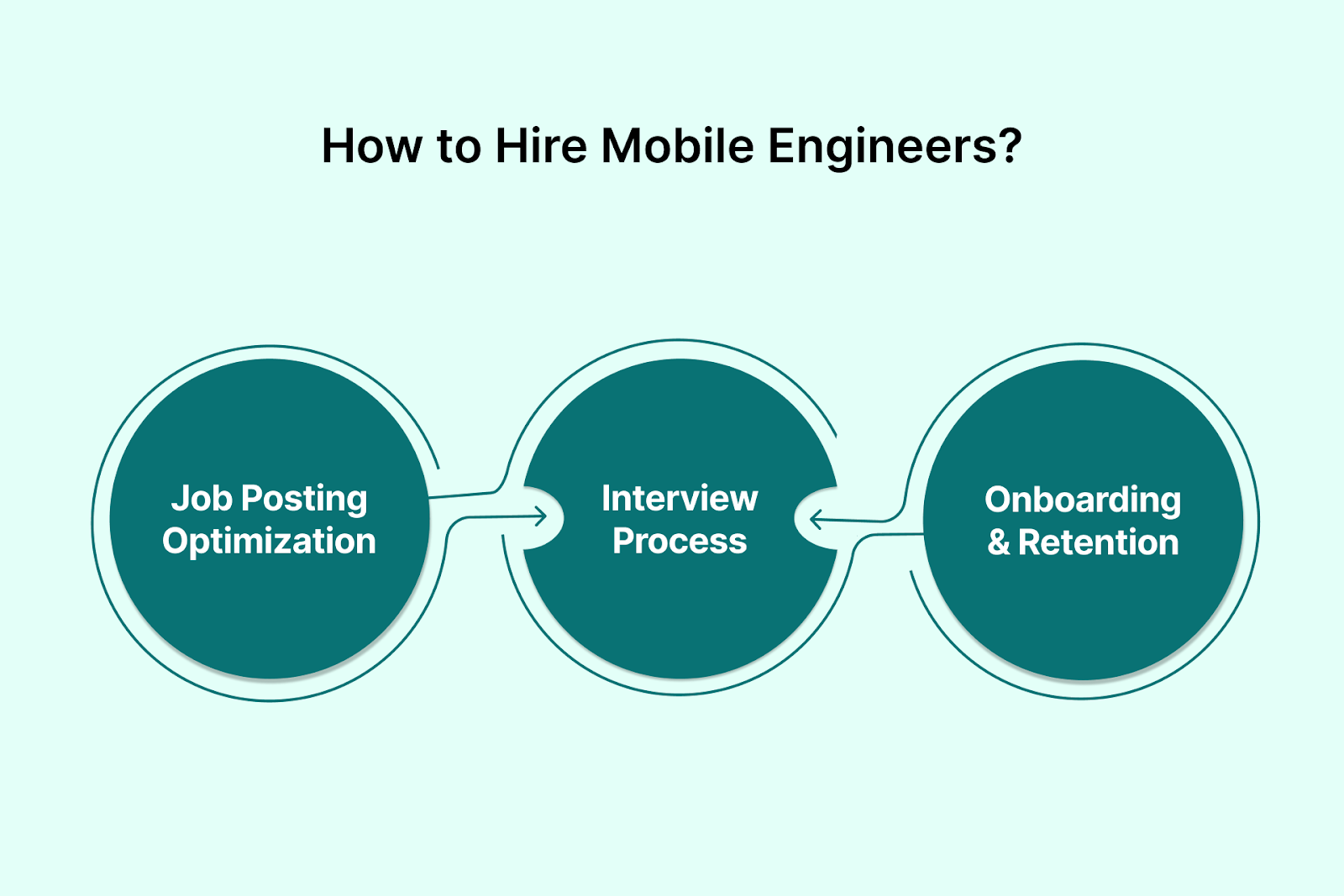
Securing top mobile engineering talent starts with a strategic hiring approach. Here’s how to attract, assess, and retain the right candidates.
A. Job Posting Optimization
Essential Elements for Job Descriptions
- Clear Role Expectations: Define day-to-day tasks, deliverables, and seniority level.
- Specific Technical Requirements: List required languages (Swift, Kotlin), frameworks (React Native, Flutter), and tools (Xcode, Android Studio).
- Company Culture Highlights: Showcase your team ethos, values, and work environment.
- Compensation Transparency: Provide salary ranges to set clear expectations and attract serious applicants.
Attractive Benefits Packages
- Professional Development Budgets: Offer stipends for courses or certifications.
- Latest Device Access: Supply test devices and hardware to work on cutting-edge tech.
- Conference Attendance: Support participation in industry events.
- Flexible Working Arrangements: Promote remote or hybrid schedules to boost work-life balance.
B. Interview Process Best Practices
Technical Assessment Stages
- Coding Challenges: Use platform-specific problems (e.g., UI implementation tasks).
- System Design Discussions: Evaluate architectural thinking for scalability.
- Portfolio Review Sessions: Discuss previous app projects, code quality, and outcomes.
- Pair Programming Exercises: Observe collaborative problem solving in real time.
Evaluation Criteria
- Technical Proficiency: Confirm mastery of languages, tools, and frameworks.
- Problem-Solving Approach: Look for structured debugging and optimization methods.
- Communication Clarity: Ensure candidates explain technical concepts effectively.
- Cultural Fit Assessment: Gauge alignment with team values and work style.
C. Onboarding & Retention Strategies
Effective Onboarding
- Comprehensive Code Base Introduction: Walk new hires through architecture, conventions, and workflows.
- Mentorship Program Assignment: Pair hires with experienced engineers for guidance.
- Tool and Resource Access: Provide accounts, documentation, and support channels from day one.
- Team Integration Activities: Schedule meet-and-greet sessions and collaborative workshops.
Long-term Retention
- Career Progression Pathways: Outline clear promotion and skill-growth tracks.
- Skill Development Opportunities: Fund advanced training, certifications, and hackathons.
- Competitive Compensation Reviews: Conduct regular salary and benefits evaluations.
- Innovation Project Participation: Encourage involvement in R&D or experimental features to foster ownership and enthusiasm.
By refining your job postings, crafting a rigorous yet fair interview process, and nurturing new hires with robust onboarding and retention plans, you’ll build a mobile engineering team ready to deliver exceptional applications.
Also Read: Effective HRM Recruitment Methods for Top Talent Hiring
Hire Mobile Engineers with Weekday
Finding highly skilled mobile engineers can make or break your next app launch, but sifting through hundreds of resumes is time-consuming and risky.
That’s why over 2,500 top startups and enterprises trust Weekday to simplify the hiring of world-class mobile engineers.
Data-Driven Talent, Vouched by Tech Peers
Weekday leverages India’s largest professional database, covering nearly 80% of the white-collar workforce. Unlike job boards or staffing agencies, Weekday’s AI platform sources, vets, and matches candidates through a unique referral network.
Every mobile engineer you find with Weekday is not only technically verified but personally vouched for by experienced tech professionals.
Features and Services
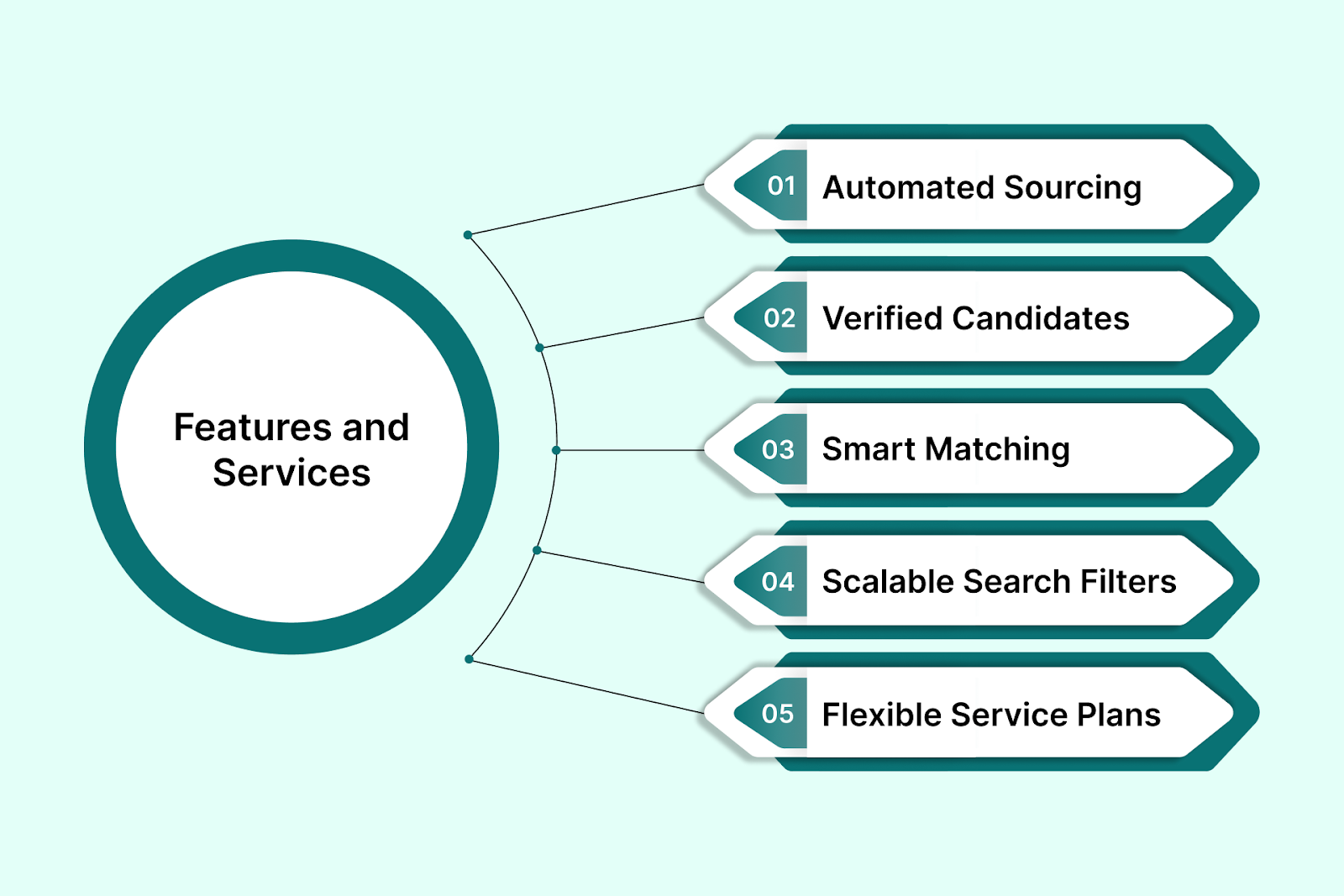
- Automated Talent Sourcing: Swiftly identify high-quality iOS, Android, and cross-platform engineers—no manual search required.
- Peer-Verified Candidates: All engineers are recommended by industry peers, raising the bar for quality and fit.
- Smart Matching & Outreach: Let AI match your requirements and handle communication at scale, including reference checks, reminders, and interview scheduling.
- Scalable Search Filters: Screen for specialized mobile skills (Swift, Kotlin, React Native) in minutes.
- Flexible Service Plans: Choose from SaaS access for in-house teams or a “White Glove” end-to-end hiring service for rapid scaling.
Ready to Hire Top Mobile Engineers?
Skip the talent search struggle—tap into a pre-vetted pool of engineering experts today. Get started with Weekday:
Frequently Asked Questions
Q1: What is the most important skill for a mobile engineer?
The most critical skill is proficiency in native and cross-platform mobile development using languages like Swift or Kotlin, combined with a strong understanding of UX/UI principles and backend integration.
Q2: How do I make my job posting stand out to mobile engineers?
Clearly state required skills, responsibilities, and company culture. Highlight professional growth, flexible work options, and compensation details to attract the best talent.
Q3: Do mobile engineers need a computer science degree?
While a degree in computer science or related fields is common, many successful mobile engineers come from coding bootcamps, self-learning backgrounds, or open-source contributions, provided they show a strong portfolio.
Q4: How can I assess a candidate's mobile engineering expertise?
Use technical assessments such as coding challenges, system design interviews, portfolio reviews, and pair programming exercises. Evaluate not just knowledge, but also problem-solving approach and communication skills.
Q5: Why should I use a platform like Weekday for hiring?
Weekday leverages AI to source and vet peer-verified candidates, streamlining your hiring process and reducing the risk of a bad hire. This means you can connect with highly qualified mobile engineers faster and with greater confidence.