
Last updated: 25 November 2026
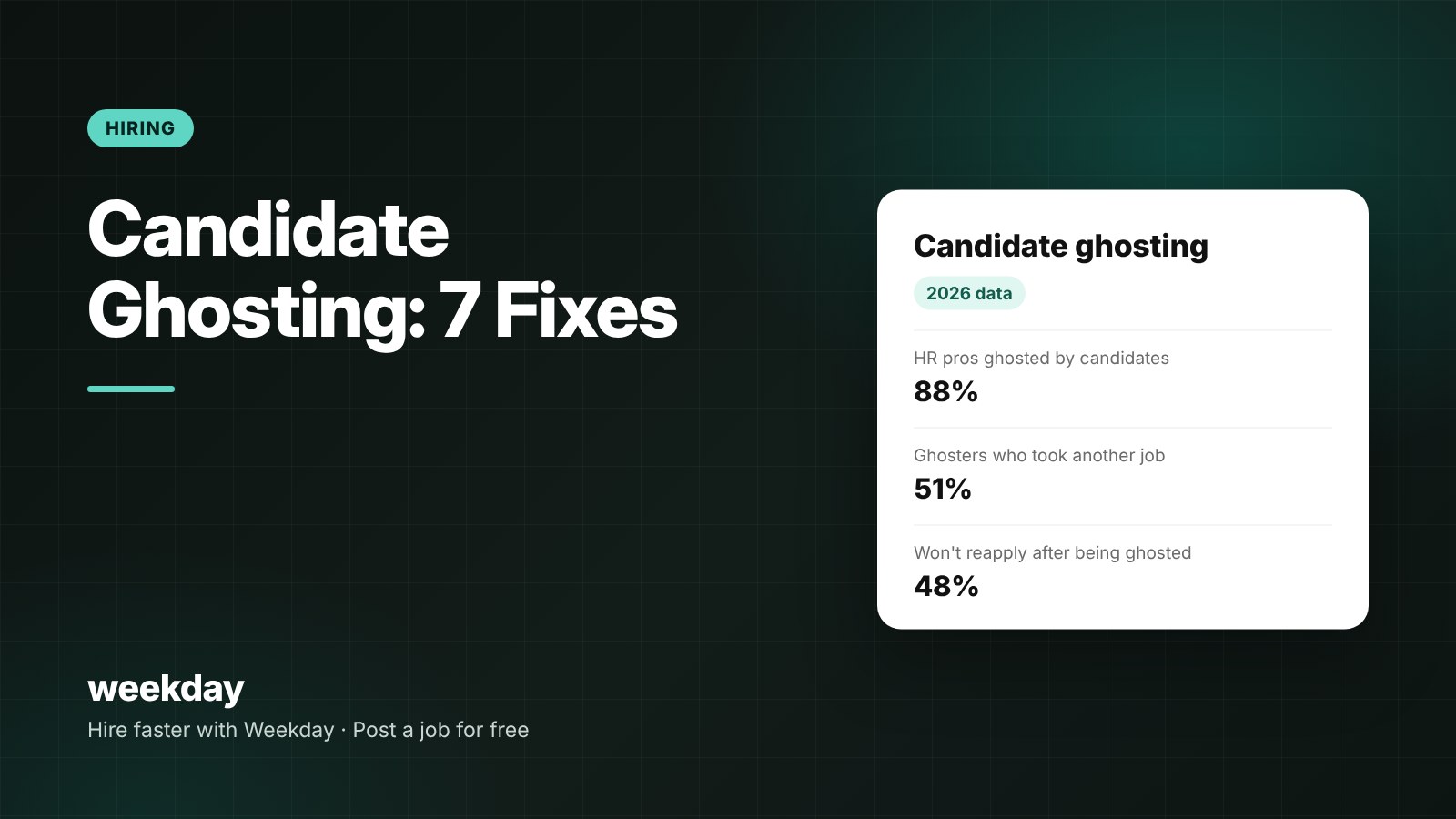
Quick answer: Candidate ghosting is now normal. In a LiveCareer survey of 900+ US HR professionals, 88% said candidates ghosted them partway through hiring. In another LiveCareer survey, 1 in 4 job seekers admitted ghosting an employer, and the top reason was simple: 51% had accepted another job. It cuts both ways, too. 48% of people won't apply to a company again after it ghosts them. The fixes are mostly about speed, clarity and closing loops: share pay early, move fast, give one named contact, use the channel people answer, make "no" easy, never ghost back, and stay close during the notice period.
You line up a strong candidate. Two good rounds. Then nothing. No reply to email, no answer on the phone, and the hiring manager asks you what happened. This guide explains why candidates disappear, using the latest survey data and what recruiters are saying on Reddit, and gives you seven fixes you can start this week.
How common is candidate ghosting?
- 88% of HR pros said candidates ghosted them midway through hiring, in LiveCareer's survey of more than 900 US HR professionals. 71% said it happened more than the year before (HR Dive).
- 1 in 4 job seekers (25%) said they had ghosted an employer, and 39% said they'd consider it if a hiring experience felt unfair or poorly handled (LiveCareer).
- 89% of UK businesses said ghosting is a problem, and 55% said it had made hiring harder, in Indeed's 2024 survey of 1,500 businesses (HRD Connect).
It isn't only a US problem. A r/recruiting thread with 65 comments started from a story about a new hire at a Delhi startup who left his laptop on his desk at lunch on day one and never came back. The poster's point was fair: walking away from a bad fit is fine. Going silent is the problem.
Why candidates disappear
| Reason (LiveCareer survey) | Share of ghosters | What it tells you |
|---|---|---|
| Accepted another job | 51% | You were too slow, or not their first choice |
| Lost interest in the role or company | 32% | The role or the process didn't sell itself |
| Bad interview experience or poor communication | 23% | Something in your process put them off |
| Pay or benefits not competitive | 23% | They found out the pay too late |
| Job differed from how it was described | 19% | Your JD and your interviews told different stories |
| Process felt overly automated or impersonal | 12% | Nobody real seemed to be on the other side |
Source: LiveCareer, survey of 1,008 employed US adults.
Look at the list again. Almost every reason is something you can change: speed, pay clarity, communication and an honest job description.
Ghosting goes both ways
Candidates learn ghosting from employers. In Greenhouse's survey of 2,500 workers in the US, UK and Germany, 61% said they'd been ghosted after a job interview (Greenhouse, Dec 2024). We cover the candidate side in ghosted after an interview.
And it costs employers later. LiveCareer's 2026 ghosting report found that after being ghosted by a company (LiveCareer):
- 48% wouldn't apply to that company again
- 42% would trust it less
- 37% would tell others about it
- only 17% said it wouldn't change how they see the company
Every candidate you leave hanging is a future applicant, referral source or customer you may lose.
Why it hits harder in India
The notice period. Most experienced hires in India serve 30 to 90 days before joining (notice period guide). That's two or three months for another offer or a counter offer to arrive. Many employers try to dodge this by hiring only people who can start now. In a Weekday analysis of 46 LinkedIn hiring posts from the last 30 days (Nov 2026), 19 (41%) asked for immediate joiners. It's a small sample, but it shows how common the reflex is.
Asking for immediate joiners doesn't stop ghosting. It just shrinks your pool. The better move is to manage the gap, which is fix 7 below. Our guide on counter offers and offer drop-outs goes deeper on that stage.
7 fixes for candidate ghosting
1. Share the pay range before the first interview
23% of ghosters said the pay or benefits weren't competitive. If they find out in round three, they leave quietly. Put the range in the job post, or say it in the first call and ask for their expected CTC.
2. Move faster than the other offer
51% ghosted because they took another job. Book the next round within two working days. Hold the debrief on the same day as the final interview. Tell candidates the timeline at the start and stick to it.
3. Give every candidate one named person
Poor communication and an impersonal process drove 23% and 12% of ghosting. Use one recruiter or hiring manager as the single contact, by name, from first call to joining. Automated emails are fine for scheduling, but not for every touchpoint.
4. Reach people where they answer
A r/recruiting thread with 51 comments, started by a recruiter of almost 30 years, said calls now get flagged as spam and even legit texts get filtered. In India, many candidates reply faster on WhatsApp than on email. Ask each candidate which channel they prefer, and use it.
5. Make "no" easy to say
Some people ghost because saying no feels awkward. End your messages with one line: "If you're no longer interested, just reply 'pass'. No hard feelings." You'll get more clear answers, and you can close the role faster.
6. Never ghost back
Close every loop, including rejections after one call. A two-line note is enough. Weekday's free rejection email generator writes one in seconds. It protects you from the 48% who'd never apply again.
7. Guard the gap between offer and joining
Send the written offer within a day or two. Check in every week during the notice period, and invite them to a team lunch or call. Offer a notice period buyout if it brings the start date closer. Keep your second-best candidate warm until day one. And track drop-off by stage, so you know where people actually leave.
Quick check: Pull your last 20 candidates who went silent. Mark the stage where each stopped replying and how many days had passed since your last message. If most went quiet after a slow gap, fix 2 is your biggest lever. If most went quiet after the offer, start with fix 7.
Tired of chasing candidates who go silent?
Weekday's AI sourcing agent finds people who fit your role and reaches them over email, WhatsApp and phone, with a 50%+ response rate reported on the Weekday homepage. You talk only to people who've said they're interested.
FAQ
What is candidate ghosting?
Candidate ghosting is when a candidate stops replying during hiring without saying why. It can happen after an application, before an interview, after an offer, or even on the first day of work.
How common is candidate ghosting?
Very. In a LiveCareer survey of more than 900 US HR professionals, 88% said candidates had ghosted them partway through hiring. In a separate LiveCareer survey, 1 in 4 job seekers said they had ghosted an employer.
Why do candidates ghost employers?
The top reason in LiveCareer's survey was accepting another job (51%). Others were losing interest (32%), a bad interview experience or poor communication (23%), pay that wasn't competitive (23%) and a job that differed from its description (19%).
How do you stop candidates from ghosting?
Share the pay range early, move fast, give each candidate one named contact, message them on the channel they use, make it easy to say no, close every loop yourself, and stay in touch weekly between offer and joining.
Should you ghost candidates you reject?
No. LiveCareer found 48% of people wouldn't apply to a company again after it ghosted them, and 37% would tell others. A short, kind rejection protects your future pipeline.
Sources
- HR Dive: LiveCareer survey of 900+ US HR professionals (Dec 2025)
- LiveCareer: 1 in 4 job seekers have ghosted a potential employer (Mar 2026)
- LiveCareer: Ghosting consequences report (Jul 2026)
- HRD Connect: Indeed UK ghosting research (Feb 2024)
- Greenhouse 2024 State of Job Hunting (PR Newswire, Dec 2024)
- Reddit: r/recruiting, new hire left on day one; r/recruiting, reaching candidates when calls get flagged as spam
- Weekday analysis of 400 top Reddit posts, 420 LinkedIn posts and 400 X posts from the last 30 days (Nov 2026); 46 LinkedIn hiring posts counted for the immediate joiner figure





