
Last updated: 18 November 2026
Quick answer: A joining bonus is a one-time payment you give a new hire for accepting your offer. In India, it is most useful to cover a candidate's notice period buyout, to make up for a bonus they lose by leaving, or to close a small gap without changing your salary band. Size it from the actual cost to the candidate, pay part of it after a few months, add a clear repayment clause, and remember it is taxed as salary.
A joining bonus is one of the few offer levers that costs you once, not every year. Used well, it gets a strong candidate to say yes and to join sooner. Used badly, it hides a salary problem and creates resentment in the team. This guide shows when it helps and how to set it up.
Joining bonus vs other bonuses
| Type | When it is paid | What it is for |
|---|---|---|
| Joining bonus (sign-on bonus) | Once, at joining or in parts over the first months | Winning the candidate and covering switching costs |
| Retention bonus | After the person stays a set time | Keeping key people through a critical period |
| Performance or annual bonus | Every year, based on results | Rewarding performance |
| Relocation support | Around the move | Covering travel and setup costs in a new city |
When a joining bonus makes sense
1. To buy out a long notice period
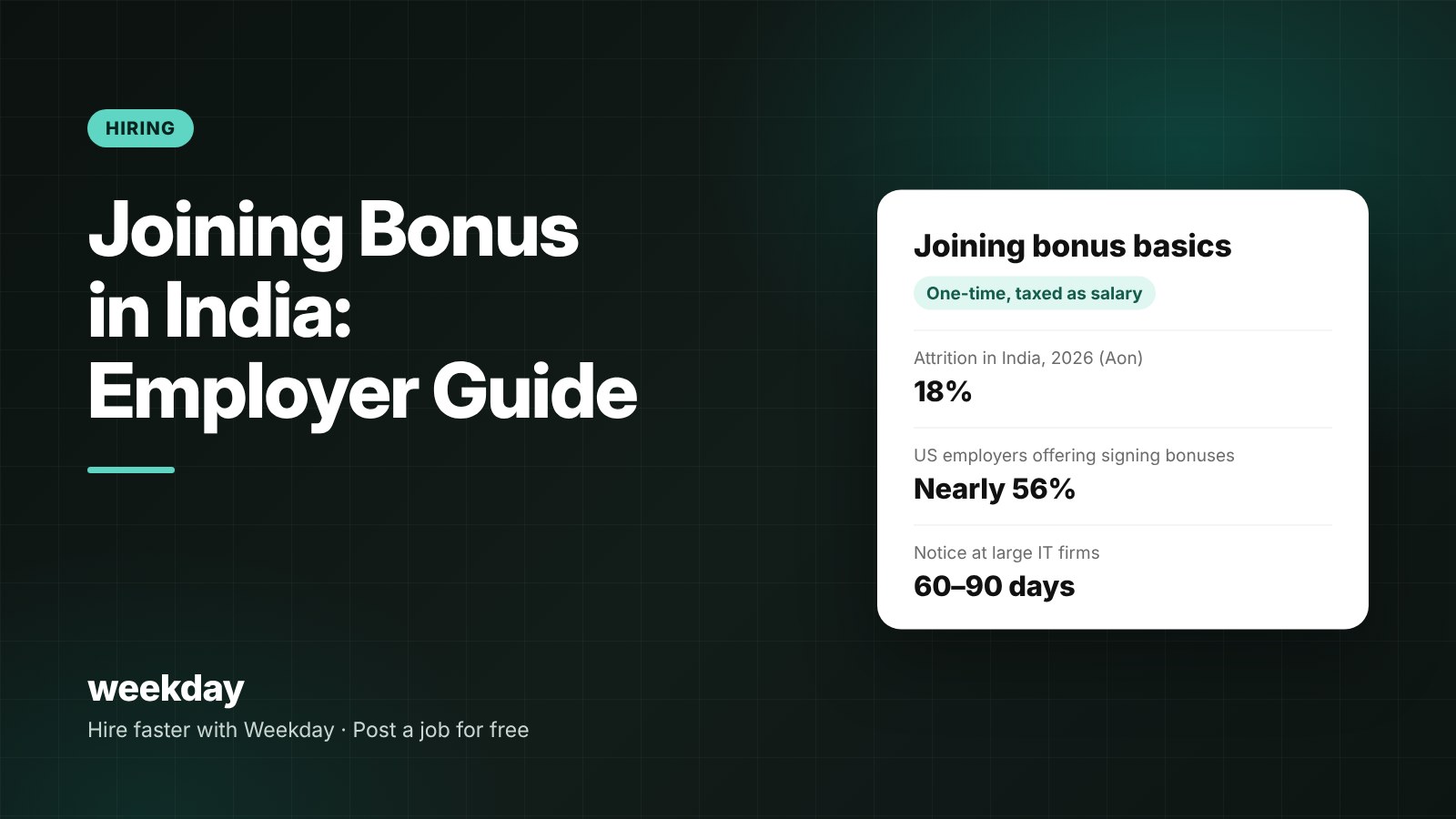
In India, notice is usually 30 days at startups and 60–90 days at large IT services firms and MNCs, and 90+ days for senior roles (Weekday notice period guide). If you need the person sooner and their company allows a buyout, you can cover the buyout cost as a joining bonus. Weekday's guide walks through exactly this case: a candidate with a ₹1,32,000 buyout asks the new employer to cover it as a joining bonus so they can join a month earlier.
2. To replace money they lose by leaving
If a candidate will lose an annual bonus, unvested stock or a retention payment by switching now, a joining bonus can make up for it. Ask for the amount and the payout date, and cover only what they would actually lose.
3. To close a small gap without breaking your band
If the candidate wants slightly more than the top of your band, a one-time bonus can close the gap for year one. Be careful: if the gap is large, the real problem is your band. See our guide on salary negotiation for how candidates think about this.
4. Relocation
For someone moving cities, a one-time amount for travel, deposit and setup can be more useful to them than a slightly higher salary.
How to size it
Start from the real cost to the candidate, not a round number.
Weekday's notice period guide notes that recovery is usually calculated as gross or basic pay ÷ 30 × days short, depending on the contract. Ask the candidate for the figure from their current employer in writing.
Example: a candidate earns ₹1,20,000 a month gross and wants to skip 30 days of notice. If their contract uses gross pay, the buyout is about ₹1,20,000 (₹1,20,000 ÷ 30 × 30). That is the right starting point for the joining bonus, plus the tax adjustment below.
Tax: gross it up or not?
A joining bonus, including one that covers a buyout, is taxed as salary, as Weekday's notice period guide explains. That means the candidate receives less than the headline amount. If your goal is to fully cover their buyout, you will need to "gross it up": pay a larger amount so that the in-hand figure after tax matches the buyout. Agree in the offer letter which one you are doing, so there is no argument later.
Structure: when to pay and what if they leave
- Split the payment. For example, half on joining and half after three or six months. This protects you if the hire does not work out.
- Add a repayment clause. State that the bonus (or a pro-rata part of it) must be repaid if the person resigns within a set period. Keep the period reasonable.
- Put it in the offer letter. Amount, payment dates, tax treatment and repayment terms. Weekday's offer letter format guide shows where it fits.
- Keep it confidential, but consistent. If two similar hires get very different bonuses for no clear reason, it will come out.
Attrition makes this worth getting right. Aon reports overall attrition in India rose to 18% in 2026 from 16.2% in 2025 (Aon). A bonus with no repayment terms is easy to collect and leave.
This is general guidance, not legal or tax advice. Check repayment clauses and tax treatment with your HR, legal or payroll team.
How US signing bonuses compare
In the US, signing bonuses are common for new graduates. Nearly 56% of employers expect to offer signing bonuses to Class of 2026 hires, up from 52% a year earlier, and nearly 60% actually gave them last year. Of employers planning bonuses, 47.2% offer them to every graduate hired and 52.8% only to selected candidates (NACE, March 2026).
The lesson for Indian employers hiring freshers: a small, standard joining amount for all campus hires is simpler and fairer than negotiating one by one.
Common mistakes
- Using a joining bonus to hide a salary that is below market. The gap comes back at the first appraisal.
- Promising "we'll cover your buyout" without a number. Get the figure in writing first.
- Forgetting tax. The candidate expects the full amount in hand and gets less.
- No repayment clause, or one so harsh that good candidates walk away.
- Paying it all on day one for a senior role with a long ramp-up.
Sample joining bonus clause (plain English)
Adapt this with your legal team:
"You will receive a one-time joining bonus of ₹[amount], less applicable taxes. 50% will be paid with your first month's salary and 50% after you complete [three] months of service. If you resign or are dismissed for cause within [12] months of joining, you agree to repay the joining bonus received, reduced pro rata for each completed month of service."
Fill in the brackets to match your policy. Keep the numbers the same for similar roles.
Ready to make offers that land?
Post your role on Weekday for free and reach candidates whose expected pay and notice period fit your plan. Your first role includes 200 reach-outs, with no credit card.
Post a free jobFrequently asked questions
What is a joining bonus?
A one-time payment an employer gives a new hire for accepting an offer, usually paid at joining or in parts over the first few months.
Is a joining bonus taxable in India?
Yes. It is taxed as salary. If you want the candidate to receive a specific amount in hand, you need to gross it up.
Can a company ask for a joining bonus back?
An offer letter can include a repayment clause if the employee leaves within a set period. Check the wording with your legal team.
How much joining bonus should I offer?
Base it on a real cost: the notice buyout, a bonus the candidate will lose, or relocation. Avoid round numbers with no reason behind them.
Can a joining bonus cover a notice period buyout?
Yes, if the candidate's current employer allows a buyout. It can bring the joining date forward by weeks.





